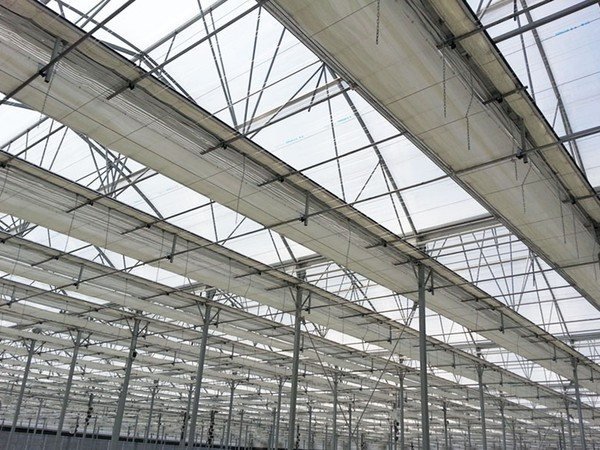
For a commercial greenhouse in a cold region, reducing heat loss is a practical concern when choosing a curtain system and its screen fabric. If you are comparing open and closed screens with similar shading, how much difference can the closed structure make to energy saving?
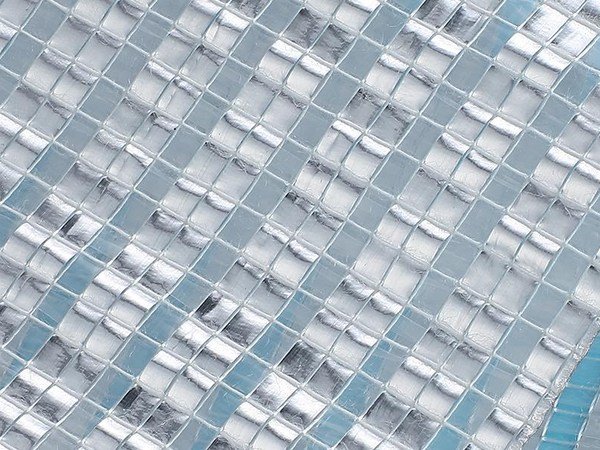
To give growers a useful reference, we compared our own INSONSHADE Diffusa screens with selected models from Svensson and Ridder, pairing open and closed products within each brand. Across six pairs with related materials and similar shading, closed models showed energy-saving rates 27–33 percentage points higher than open models: a gap of around 30 percentage points.
How We Compared Open and Closed Screens
We focused on interior screens with similar shading, related materials, 4 mm strips, and comparable installation systems. Each pair stays within one brand so that we compare that supplier’s open and closed options. Diffusa is our own INSONSHADE product range; HARMONY and RLD are the Svensson and Ridder ranges included in the comparison.
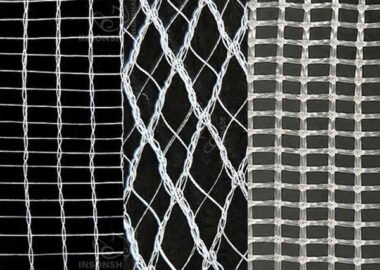
The comparison is especially clear in our INSONSHADE Diffusa K5051 and K5218-O. Both have two white diffusing strips in their repeating pattern: the closed version adds transparent material, while the open version leaves openings. Their shading rates are 50% and 52%, and their light transmission rates are 50% and 48%, respectively. Yet their energy-saving rates are 51% and 18%, a 33-percentage-point difference. Diffusa product specifications
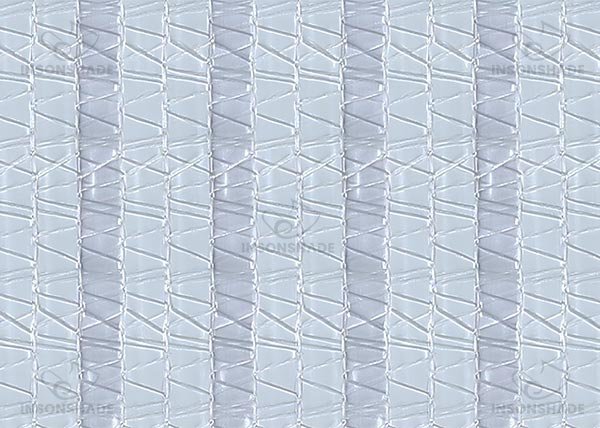
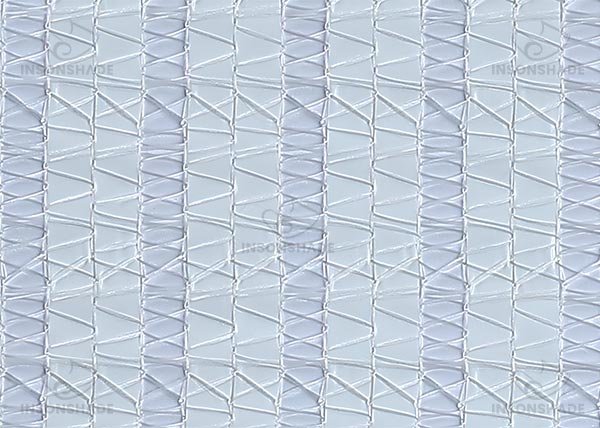
The table shows this pair alongside five others. Differences are expressed in percentage points: for example, 51% minus 18% equals 33 percentage points.
| Brand and model pair: closed / open | Shading: closed / open | Energy-saving rate: closed / open | Difference |
|---|---|---|---|
| INSONSHADE Diffusa K5051 / K5218-O | 50% / 52% | 51% / 18% | 33 pp |
| INSONSHADE Diffusa K6053 / K6020-O | 60% / 60% | 53% / 20% | 33 pp |
| Svensson HARMONY 5747 FR / 5920 O FR | Direct: 63% / 64% Diffuse: 67% / 67% | 47% / 20% | 27 pp |
| Svensson HARMONY 3845 / 4015 O | Direct: 46% / 48% Diffuse: 54% / 52% | 45% / 15% | 30 pp |
| Svensson HARMONY 4945 / 5215 O | Direct: 58% / 59% Diffuse: 63% / 61% | 45% / 15% | 30 pp |
| Ridder RLD 50 / RLD 55 O | Direct: 50% / 53% Diffuse: 54% / 56% | 47–48%* / 18% | 29–30 pp |
Sources: manufacturer product pages reviewed October 19, 2026. “pp” means percentage points. Svensson shading figures use NEN 2675; Ridder distinguishes direct and diffuse light. RLD 50 is shown as 47–48% because its webpage gives both values.
The six pairs show the same direction, with a gap of 27–33 percentage points. Two additional INSONSHADE comparisons—K6556 against K6520-O or K7020-O—show 56% versus 20%, a 36-point gap. Their strip patterns differ, and K7020-O also has 5 percentage points more shading, so these are supplementary examples rather than part of the main range.
Why Can Similar Shading Produce Different Energy Savings?
Shading and heat retention measure different aspects of a screen. A transparent strip can pass light while limiting an airflow path; an opening allows more air movement. Here, “open” and “closed” refer to the fabric structure, rather than whether the curtain is retracted or deployed.

Air movement is only part of the explanation. WUR research identifies thermal radiation, air permeability, and moisture transport as factors in screen energy performance. Closed construction can support heat retention, while open construction preserves airflow. The material and operating strategy determine how that trade-off works in a greenhouse. WUR screen-material research
For a greenhouse with substantial nighttime heating needs, closed screens deserve attention alongside humidity control. Where shading must work with active roof ventilation, open screens may better suit the airflow requirement. The roughly 30-point difference helps frame that decision; the right choice still needs to fit the greenhouse’s heating and ventilation plan.
About the Data and Tests
This is a comparison of manufacturers’ nominal product figures. Our INSONSHADE energy-saving data comes from internal testing. Svensson identifies its energy-saving method as “Svensson method,” and Ridder’s technical sheets state “Ridder Climate Screens method.” These labels identify brand-specific methods; the public documents reviewed do not establish whether every measurement for these models was performed internally or independently.
In one published WUR approach, researchers measure thermal radiation properties, air permeability, and moisture transport, then use a greenhouse model to compare energy use for a reference case and a screen case under defined conditions. The basic calculation is: energy saving (%) = (reference energy use − screen-case energy use) ÷ reference energy use × 100. This illustrates a research approach, rather than a confirmed description of every brand’s method.
We compared related products rather than testing identical fabrics under one laboratory protocol. Material proportions, weights, and patterns still differ. Actual savings depend on climate, temperature settings, screen use, installation, ventilation, and humidity management. Use the roughly 30-point gap as a product-selection reference, rather than a guaranteed reduction in annual fuel costs.
References
- Product figures: the model names in the comparison table link to the original manufacturer pages.
- Test-method examples: Svensson HARMONY 5747 FR, Ridder RLD 50 technical sheet, and Ridder RLD 55 O technical sheet.
- Research context: Hemming et al. (2018), A method to quantify the energy-saving performance of greenhouse screen materials.