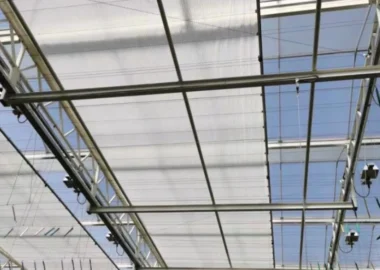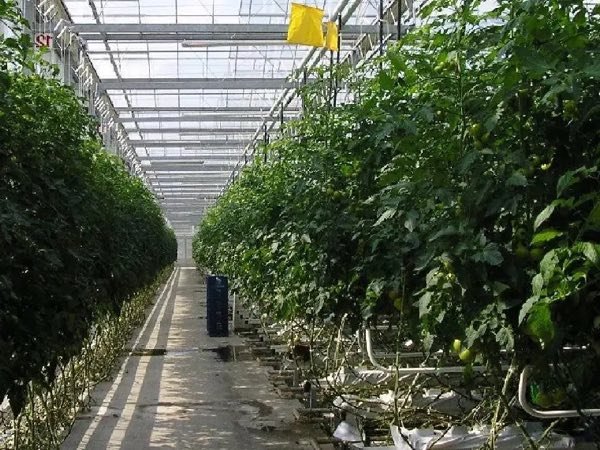
On a sunny day, there is often no shortage of sunlight above the crop. The problem may be how that light falls. Roof structures, equipment, and upper leaves can cast sharp shadows through the canopy. Some areas in the same crop row may be very bright, while others remain dark for long periods. This pattern does not automatically mean the crop lacks light. However, it is worth checking whether the light is concentrated on only a few leaves or areas.
Diffuse light becomes relevant in this situation. Before comparing direct and diffuse light, clarify a more basic question: Is there too little light in the greenhouse, or is the available light failing to reach different areas evenly?
First, Distinguish Between Insufficient Total Light and Uneven Light Distribution
Insufficient total light means that the crop receives limited usable light during a season or period. Low-light seasons, outside obstructions, aged or dirty covering materials, and consistently high shading levels can all restrict light input across the greenhouse. In this case, the first question is how much light actually reaches the crop—not how to diffuse it.
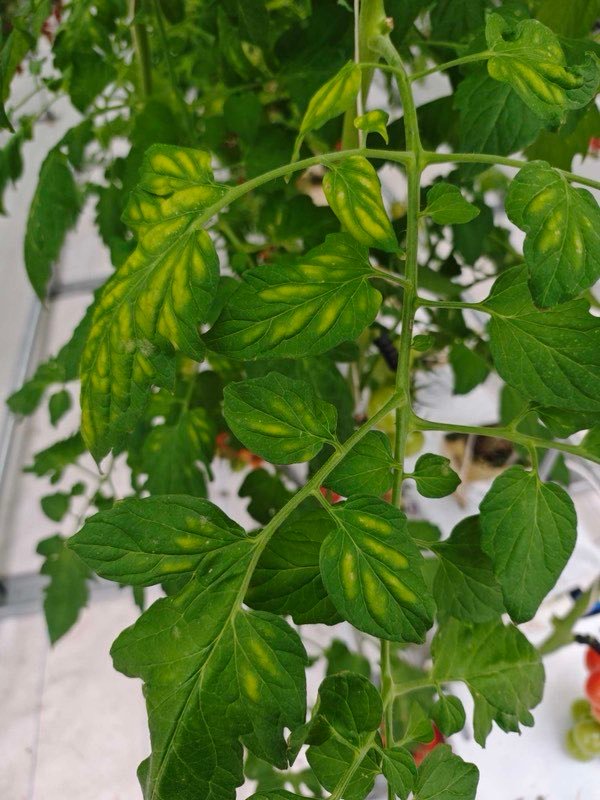
Uneven light distribution is a different situation. During some periods, the greenhouse may receive plenty of light overall. However, direct light can expose upper leaves, some areas between crop rows, or specific greenhouse sections to higher instantaneous light levels. Meanwhile, the middle and lower canopy, or areas shaded by structures, receive less light. In tall and dense crop canopies, upper leaves can intercept much more light. The resulting reduction in light reaching the middle and lower canopy has long been a research concern. A Wageningen research summary identifies vertical and horizontal light distribution within the canopy as an important basis for understanding the effects of diffuse light.
If low total light is not the main issue, examine how light enters the greenhouse and reaches the crop canopy. Understanding the difference between direct and diffuse light is the basis for making that assessment.
How Do Direct Light and Diffuse Light Behave Inside a Greenhouse?
Natural light contains both direct and diffuse components. Direct light enters the greenhouse from a well-defined direction and can create sharp boundaries between bright and shaded areas beneath plants, roof trusses, pipes, or equipment. Diffuse light arrives from a wider range of directions. Its shadows are usually softer, and it may reach more areas within the crop canopy.
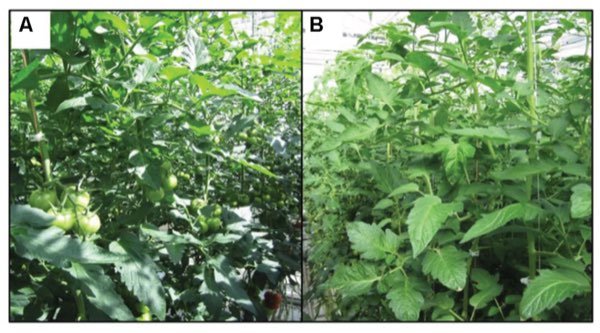
When direct light is concentrated on a small number of exposed leaves, the upper canopy may experience very high instantaneous PPFD. At the same time, leaves in the middle and lower canopy may remain under much lower light conditions. The photosynthetic response of an individual leaf to light intensity is not linear. Therefore, distributing the same amount of light more evenly among leaves can sometimes improve light-use efficiency across the whole canopy. Reviews indicate that diffuse light can create a more even spatial distribution of light within the canopy. It can also reduce fluctuations caused by alternating shadows and sunflecks at the same location. However, the effect varies with sun position, season, crop structure, and cultivar response. The review by Li and Yang also emphasizes that winter and summer light conditions should not be treated in the same way.
What On-Site Signs May Indicate a Light-Distribution Problem?
How can you recognize a possible light-distribution problem in a commercial greenhouse? A practical starting point is to look for the following signs.
| What You Observe | What It May Indicate | What Else to Check |
|---|---|---|
| Strong, sharply defined shadows appear on the floor, beneath equipment, or inside the canopy on sunny days | Light is strongly directional, creating clear local differences between bright and shaded areas | Sun angle, roof structure, equipment position, and covering material |
| The top of the canopy is very bright, while the middle and lower sections remain noticeably dark | Light distribution within the canopy needs further assessment | Crop height, density, pruning, leaf area, and row spacing |
| Different areas of the same greenhouse show clear brightness differences at certain times | Local obstructions or spatial differences may be present | Greenhouse orientation, nearby buildings or facilities, and screen operation |
| Crop management becomes noticeably more difficult during high-radiation periods | Light, leaf temperature, ventilation, cooling, and crop condition need to be assessed together | Local radiation data, indoor climate data, and the current control strategy |
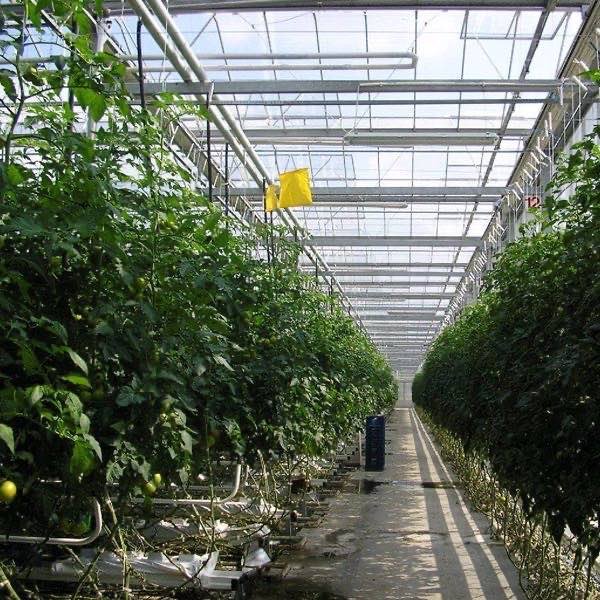
Repeat on-site checks at different times rather than relying on a single photograph. The sun angle changes from morning to noon and afternoon. The composition of light also differs between clear and cloudy days. For tall crops such as tomatoes, record canopy height, row spacing, and pruning practices at the same time. One greenhouse tomato study compared covering films with different levels of light diffusion within the same trial framework. It also measured the light environment at several canopy heights. This shows why a reading from one location cannot describe the whole canopy. It also cannot predict the results of another material or project. See the greenhouse tomato study by Zheng et al..
The signs above can provide useful clues, but they still need to be turned into specific assessment questions. For an initial on-site evaluation, start with the following three questions.
1. Is the overall amount of usable light already insufficient? First check total greenhouse light input during low-light seasons. Also check total light input if there are outside obstructions, reduced covering transmission, or consistently high shading levels. The presence of local shadows alone does not mean insufficient light diffusion is the main problem.
2. Do clear spatial differences occur repeatedly during high-radiation periods? Compare the top with the middle and lower canopy, different crop rows, and areas shaded by structures. If overall light is adequate but clear vertical or horizontal differences keep appearing, assess light distribution as a separate issue.
3. Can the differences be verified at different times or locations? Photographs and visual observations provide useful clues, but they should not be the only evidence. Begin by repeating observations at different times. Where sensors or professional support are available, compare PPFD/PAR data at multiple canopy heights and locations for a more reliable assessment.
If the overall amount of usable light is already limited, first investigate total light input. Whether you need to change how the light is distributed still depends on the season, canopy, and greenhouse conditions. Once a recurring distribution problem has been confirmed, it makes sense to move to the next stage of assessment.
What Should You Evaluate After Identifying a Light-Distribution Problem?
When on-site conditions suggest that light distribution requires attention, first collect basic project information. You can then consult a local greenhouse supplier or crop consultant. The following details help suppliers, greenhouse designers, or growing teams assess the relevant conditions:
- The greenhouse location, main growing seasons, and typical weather conditions that require the most attention;
- The crop type, canopy height and density, and the current or planned key growth stage;
- The covering material, roof structure, greenhouse orientation, and any existing shading or screen system;
- The configuration and operation of ventilation, cooling, heating, and winter energy-retention systems;
- Whether the priority is high-radiation periods, year-round light uniformity, or coordination with other climate targets.
Only after collecting this information is it useful to compare possible approaches. These may include adjusting crop and canopy management or evaluating fixed diffuse covering materials. You may also consider movable light-diffusing screens when conditions change with the season and weather.
Final Thoughts
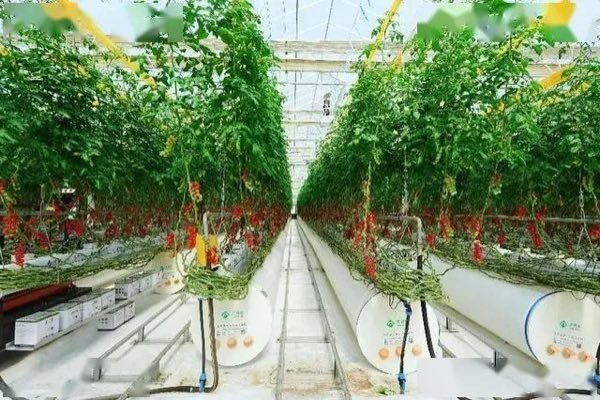
If uneven light distribution is confirmed as the main problem, the next step is greenhouse light management. Recheck canopy density, pruning, and row spacing. Assess local shading caused by covering materials, roof structures, and equipment. Then consider the season, radiation periods, and current control methods to decide whether shading or screen operation should be adjusted.
For a practical follow-up, see how to improve light distribution in a greenhouse tomato canopy. It explains how to record recurring low-light areas, check crop and structural causes, and prepare for specialist evaluation.