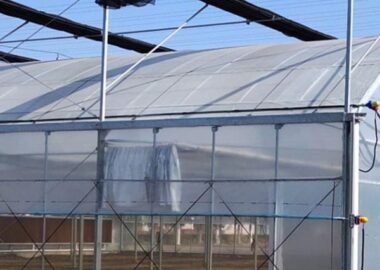
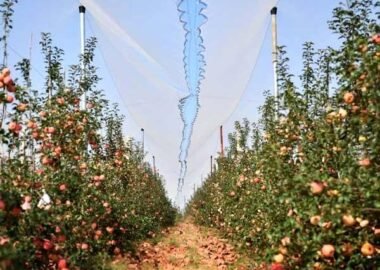
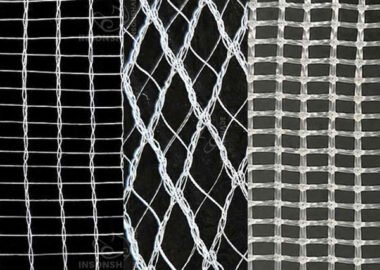
Greenhouse side curtains are one of those features that are often mentioned but not always clearly understood. Many people come across them when selecting a greenhouse, planning a retrofit, or thinking about ventilation strategies. Yet, they may not be fully sure which types of greenhouses they are suited for, what forms they come in, or whether they are actually necessary.
This article starts from these practical questions and walks you through a clearer and more structured understanding of greenhouse side curtains.
What Are Greenhouse Side Curtains
In greenhouse applications, greenhouse side curtains generally refer to curtain systems installed along the sidewalls that can be opened or closed. For many growers, the first thing that comes to mind is the roll-up side curtain system, which adjusts side openings by rolling the film up. This type of structure is most commonly used in plastic film greenhouses, polytunnels, and other setups that rely heavily on natural ventilation.
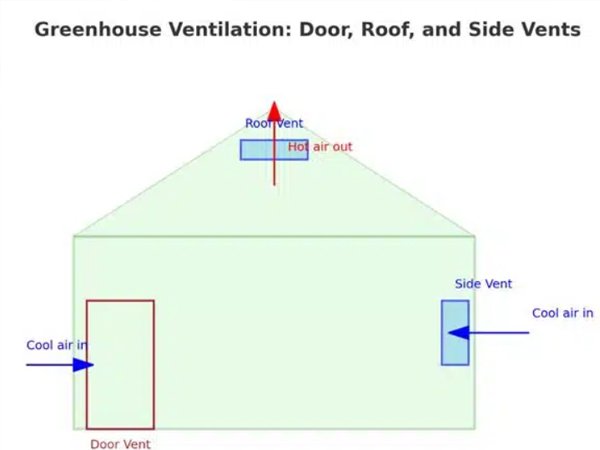
However, in modern commercial greenhouses, the meaning of side curtains is not limited to ventilation alone. In addition to traditional roll-up systems, some side-mounted curtain systems are used together with different types of climate screens. These may operate by rolling, lowering, or folding, and their main purpose is not always airflow. Instead, they can be used for shading, energy saving, insulation, heat control, or light management.
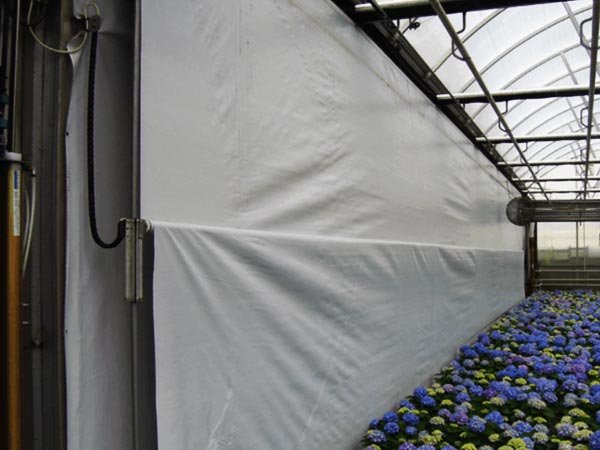
For this reason, it is more accurate to think of greenhouse side curtains as systems installed on the sidewalls that can be opened or closed to help regulate the greenhouse environment. That said, in most agricultural greenhouse applications, the most common and fundamental type remains the roll-up side curtain used for natural ventilation.
Common Types of Side Curtain Systems
Although greenhouse side curtains are all installed along the sidewalls and operate by opening and closing, they differ in structure, control method, and purpose. In most projects, side curtain systems can be broadly divided into two categories: roll-up systems (including manual and motorized types) and integrated systems that work together with top curtains.
1. Manual Roll-Up Side Curtains
Manual roll-up systems are the most common and basic type. They use a hand crank to roll up the sidewall film, making them simple in structure and easy to install and maintain. For smaller greenhouses, limited budgets, or situations where adjustments are not frequent, this option is often sufficient.
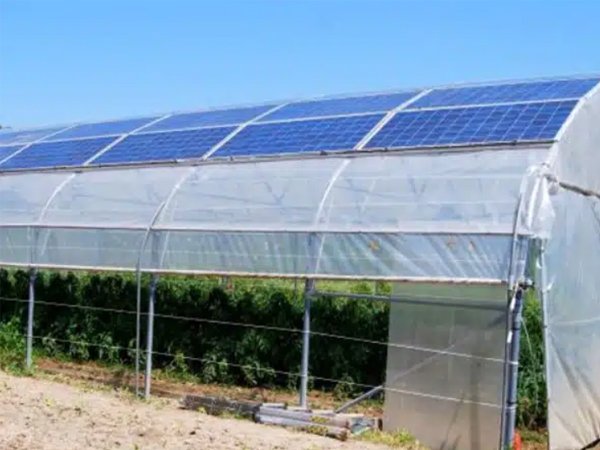
These systems are mainly used for natural ventilation. By rolling up the side film, they create a clear side opening that allows air to flow through the greenhouse and remove heat. Because of their simplicity, they are widely used in polytunnels and plastic film greenhouses.
2. Motorized Roll-Up Side Curtains
Motorized roll-up systems work in a similar way but use electric control instead of manual operation. Their main advantage is not just convenience, but the ability to handle frequent adjustments more efficiently, especially in larger greenhouses or operations planning to integrate automation.
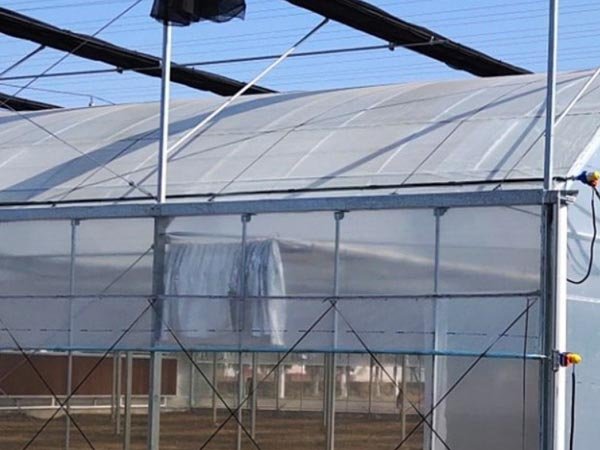
For more commercial operations, motorized systems often provide a more consistent management experience. They are particularly useful when ventilation needs to be adjusted frequently based on weather conditions or daily routines. In addition to the control method, configurations may vary—such as single-side or double-side operation, or integration with insect netting and other systems.
3. Integrated Side Curtains
Another type of side curtain system is commonly found in light deprivation greenhouses. These are not standalone side curtains, but part of a fully integrated system that works together with top blackout curtains. Their purpose is to achieve full light-blocking while also supporting insulation and other climate-control functions.
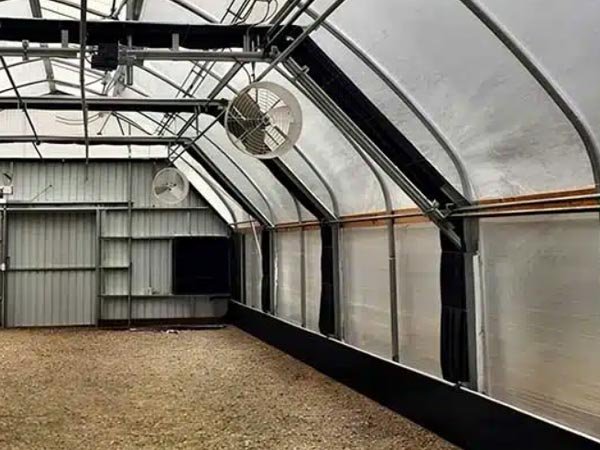
Unlike roll-up systems, these curtains are usually operated through folding or sliding mechanisms rather than rolling. Their role is less about ventilation and more about controlling the internal environment as a whole.
How Side Curtains Are Used in Different Types of Greenhouses
Side curtains are not used in the same way across all greenhouse types. Depending on the structure and management approach, they may serve as a primary ventilation method or simply as a supporting component.
1. Polytunnels
In polytunnels and hoop houses that rely on natural ventilation, side curtains are one of the most important components. Since these structures typically lack advanced cooling systems, airflow depends heavily on side openings. Without effective side ventilation, heat and stagnant air can quickly become a problem.
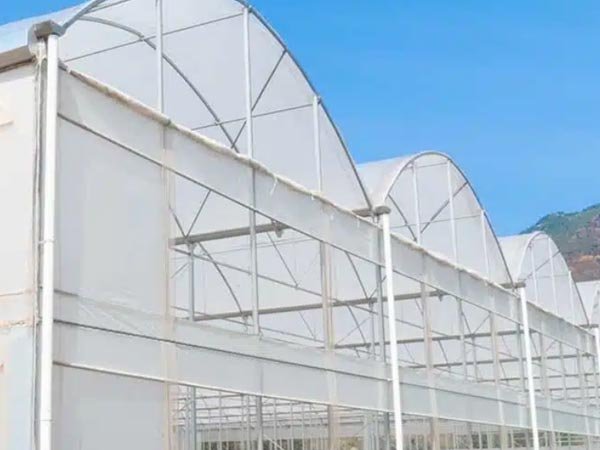
2. Multi-Span Poly Greenhouses
In medium-sized plastic film greenhouses, side curtains are also widely used. They often serve as the main ventilation method but may also work alongside other simple systems. In these setups, motorized roll-up systems are more common because they improve daily operation efficiency.
3. Modern Greenhouses
In more advanced greenhouses with glass or polycarbonate structures, ventilation is usually handled by multiple systems, such as roof vents, side vents, and mechanical ventilation. Side openings still exist, but they are often implemented as side vents rather than roll-up curtains.
In these environments, side curtains are typically not used primarily for ventilation. Instead, they may function similarly to top-curtain systems, providing shading, insulation, or other environmental controls, depending on the design.
4. Light-Deprivation Greenhouses
In light deprivation greenhouses, side curtains are usually integrated with top curtain systems to create a fully enclosed environment. The main goal is not airflow, but precise light control and environmental isolation.
If your greenhouse mainly relies on natural ventilation, side curtains are essential. If it already has a complete climate control system, side openings are just one part of a larger design.
What to Consider When Designing a Side Curtain System for Greenhouse
In real projects, a side curtain system is not something you simply install and forget. Many performance issues come from design decisions made early on rather than the system itself.
The following factors are worth paying close attention to.
1. Opening Size
Ventilation performance depends more on effective opening area than on whether a side curtain exists. In many multi-span greenhouses, total ventilation openings (side + roof) should reach around 10%–20% of the floor area.
A common rule of thumb is about 1 ft of vertical opening for every 10 ft of greenhouse width. This highlights the importance of designing sufficient opening capacity rather than just focusing on the mechanism itself.
2. Integration with Roof Ventilation
Side curtains work best when combined with roof ventilation. Relying only on side openings makes airflow more dependent on wind conditions, while combining side and roof openings improves air movement through both wind pressure and thermal effects.
3. Internal Airflow
Even with proper openings, airflow inside the greenhouse can be limited by width, crop height, and planting density. These factors should be considered during design to ensure air can move effectively.
4. Insect Netting
Side curtains are often used together with insect netting to reduce pest entry. Many growers report improved crop quality and reduced pest pressure after installing netting at side openings.
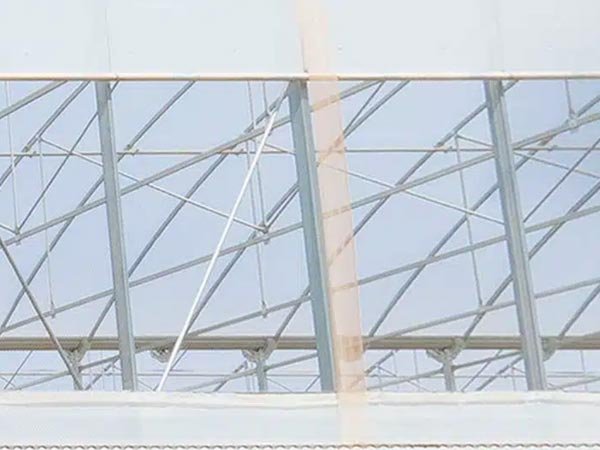
However, netting increases airflow resistance and may reduce ventilation performance. This requires balancing pest protection with airflow efficiency.
5. Manual vs Motorized Control
Control method affects daily operation. Manual systems suit smaller setups, while motorized systems are better for larger greenhouses or frequent adjustments. Automated systems can further integrate with environmental sensors.
FAQs
1. Do all greenhouses need side curtains?
Not always. They are essential in naturally ventilated greenhouses but less critical in highly automated systems.
2. Are roll-up side curtains enough for cooling?
For smaller greenhouses, often yes. For larger or high-performance setups, they usually need to work with other systems.
3. Can side curtains be added to an existing greenhouse?
In many cases, yes—especially for simpler structures. More complex greenhouses may require system-level redesign.
4. Should I use insect netting with side curtains?
It depends on pest pressure and ventilation needs. Netting improves protection but may reduce airflow.
Conclusion
Greenhouse side curtains may seem simple, but they play a key role in how a greenhouse performs. When planning a system, the most important question is not the system name, but whether your greenhouse relies more on natural ventilation or full climate control. Once that is clear, choosing the right setup becomes much easier.