When buyers choose anti-hail netting for an orchard, one common question usually comes first: what mesh size should the net use?
This question looks simple, but it is not always easy to answer in a real orchard project. If the mesh opening is too large, the net may not intercept hailstones that can damage fruit. If the opening is too small, it may also reduce light, limit airflow, and change humidity under the net. For apple, grape, blueberry, citrus, and other commercial orchards, an anti-hail net is not used only during a hailstorm. It stays above the crop for a long period and can affect the orchard microclimate every day.
So, choosing anti-hail net mesh size is not only about using the smallest opening. It should start with the local hail risk and the hailstone size that may damage the crop. At the same time, buyers also need to balance light, ventilation, shade, and crop growth conditions. This article focuses on mesh size and explains how it affects hail protection, light, and airflow. It also explains why two nets with the same mesh size may still perform differently in the field.
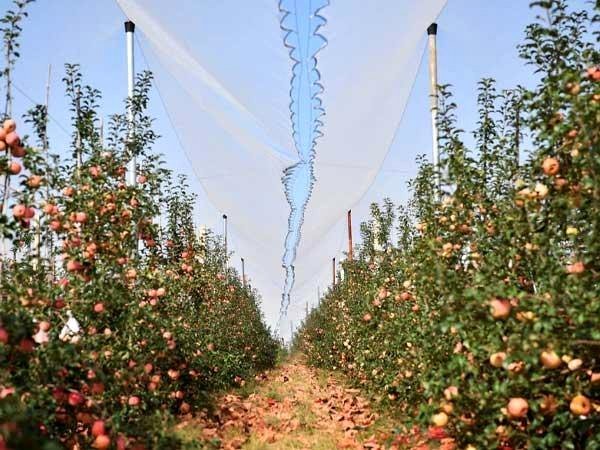
What Is Anti-Hail Net Mesh Size?
Mesh size means the size of the opening in the net. In other words, it describes how much space one opening in the net surface provides. Different agricultural net suppliers may describe this parameter as mesh size, mesh opening, opening size, or by a specific millimeter value.
Different agricultural net applications require different mesh sizes. For example, bird netting focuses on keeping birds away from fruit, insect netting focuses on pest size and airflow resistance, while anti-hail netting focuses on hail interception, impact distribution, and orchard microclimate. For a broader comparison of different net uses, see our HDPE net applications guide.
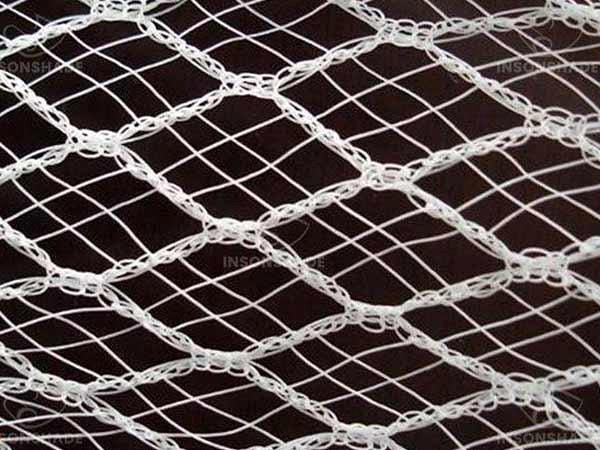
How Mesh Size Affects Hail Protection, Light, and Airflow
There is no single global standard that divides anti-hail net mesh sizes into “small,” “medium,” and “large.” However, for practical comparison, buyers can group mesh openings into smaller, medium, and larger options. This helps explain the main trade-off between hail protection, light transmission, and airflow.
| Mesh Opening Group | Approx. Reference Range | Main Benefit | Possible Trade-Off |
|---|---|---|---|
| Smaller openings | About 2-4 mm | Help intercept smaller hailstones and provide stronger protection tendency | May reduce airflow and light transmission more noticeably |
| Medium openings | About 4-7 mm | Offer a more balanced option between protection, light, and ventilation | Still need to match local hail risk and crop needs |
| Larger openings | About 7-10 mm or above | Support better airflow and light transmission | Need a more stable structure and installation system to maintain protection |
Mesh size can also work together with net color to change the light environment under the net. For example, white, black, and gray anti-hail nets may create different results in light transmission, shade, and fruit coloring. If the buyer is also comparing color options, the topic of anti-hail net color should be reviewed together with mesh size.
This means mesh size should not be treated as an isolated number. It should answer three practical questions: Does the local hail risk require a smaller opening? Does the crop need more available light? Does the orchard need better air movement to manage heat and humidity? When these questions are considered together, mesh size selection becomes closer to the real needs of the project.
Why the Same Mesh Size Can Perform Differently
Even when two anti-hail nets show the same or similar mesh size, their field performance may still be different. Mesh size only describes the opening. It does not fully show how the net handles hail impact, keeps surface stability, or maintains performance after long outdoor exposure.
Hail size and impact are not fixed
Mesh size should first be compared with the hailstone size that may damage the crop in the local area. The NOAA Storm Prediction Center defines a severe thunderstorm as a storm that can produce hail 1 inch in diameter or larger. It also defines significant severe thunderstorms as storms that can produce hail 2 inches in diameter or larger. This shows that, in high-risk areas, damaging hailstones can be much larger than common anti-hail net openings.
The NOAA National Severe Storms Laboratory also explains that hail fall speed depends on hailstone size, air friction, local wind conditions, and melting. In practice, hail damage is not only a matter of diameter. Impact speed, wind direction, and how the hail hits the net also matter.
This is important for anti-hail net selection. A net does not solve every hail problem simply because its opening is smaller than the hailstone. Mesh size is a starting point, but real protection also depends on whether the net can spread impact, keep proper tension, hold stable edges, and work with the support system.
Net structure changes performance
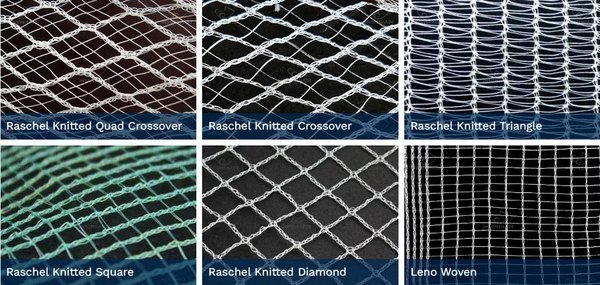
The same mesh size can perform differently when the net structure is different. Some anti-hail nets use a basic structure, while others use reinforced yarns, crossover patterns, reinforced edges, or more stable weaving and knitting methods. For more detail on this topic, see our comparison of Raschel knitted, Plain woven, and Leno woven anti-hail nets.
This is why buyers should not compare mesh size alone. A larger opening with a stable reinforced structure may perform more reliably than it looks. A smaller opening with weak yarn or poor surface stability may stretch, deform, or lose protection during long-term use.
A simple way to understand this is: mesh opening helps classify the net, but structure determines how the net performs in the field. The opening gives the first impression, while yarn, structure, and the full system decide the real result.
GSM, UV stability, and installation also matter
Besides net structure, GSM, yarn strength, UV stability, and installation also affect the performance of the same mesh size.
GSM can show how much material is used per square meter, but it does not directly define the protection level by itself. Yarn strength and fabric stability affect how the net surface responds to impact. UV stability affects how well the net resists aging after years of outdoor use. Installation tension, support wires, post spacing, and edge fixing also affect whether the net surface can remain stable under hail, wind, and long-term load.
For commercial orchards and agricultural distributors, a safer approach is to review mesh opening, GSM, material, net structure, UV stability, sample details, and installation requirements together.
Conclusion
Anti-hail net mesh size should first be considered from local hail risk. If the goal is to reduce direct fruit damage, the mesh opening should generally be smaller than the hailstone size that commonly causes crop damage in the target area. This is the basic starting point.
But this starting point is not enough. A smaller opening is not always the right answer for every orchard. Mesh size also needs to be balanced with crop light demand, orchard ventilation, humidity changes, shade effect, and the installation system. For high-value orchards, the goal is not to chase one number. The goal is to find a practical balance between hail protection, light, and airflow.
It is also important to remember that mesh size is only one parameter in anti-hail net selection. Two nets with the same opening size may perform differently because of net structure, GSM, yarn strength, UV stability, installation tension, and the support system.
INSONSHADE supplies HDPE protective netting options for commercial orchards, agricultural distributors, and project buyers. Different mesh openings, GSM options, colors, roll widths, and packaging methods can be discussed based on the target market and project requirements. When buyers are not sure which mesh opening is suitable, samples and specification discussion can help make the first selection clearer.