Most greenhouse screen inquiries include the required specifications, installation method, and application. But buyers who are new to commercial greenhouses, as well as growers upgrading an existing facility, may not yet know the climate-control function of each type of screen material. They may also be unsure how to compare and how to choose the suitable ones.
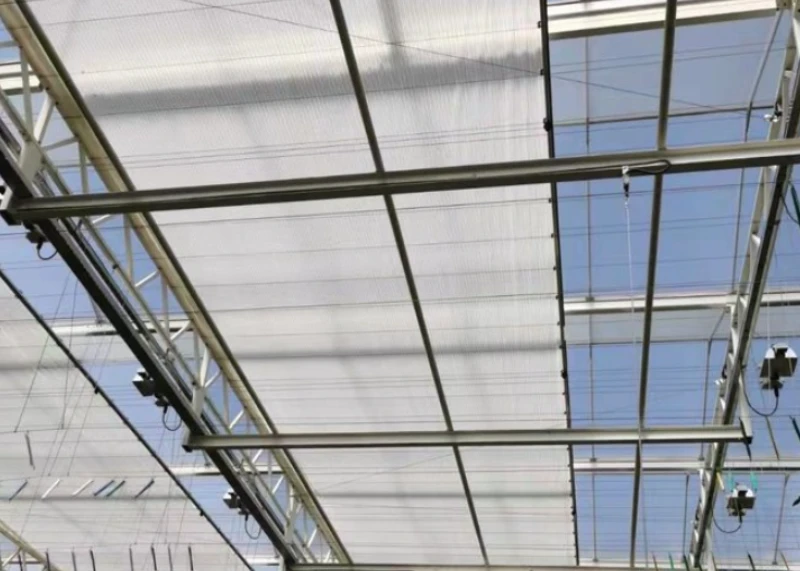
This guide introduces some common types of greenhouse screen materials and explains where they are suitable, then outlines the key information to confirm before selecting a material. Whether you already have specific material requirements or are still deciding which type of screen you need, this guide may be helpful.
What Is a Greenhouse Screen?
In commercial greenhouses, a greenhouse screen is a functional fabric installed on the roof, sidewalls, or outside the greenhouse structure. It can be opened or closed by a curtain system to manage incoming light, reduce heat load during hot periods, help retain heat when the greenhouse is heated, or create blackout conditions for crops that require a controlled photoperiod. Its actual function depends on the material structure, light properties, air permeability, and installation position.
A screen material is not the same as a complete curtain system. It is also not necessarily the same as ordinary shade netting or an insect screen installed at a ventilation opening. The screen material provides functions such as shading, heat retention, light diffusion, or blackout, while a complete curtain system also includes the support structure, drive units, motors, and controls. Insect netting, by comparison, is selected mainly based on the target pest, mesh opening, and ventilation requirements.
Defining the role of each material first makes it much easier to determine which type of greenhouse screen the project actually needs.
Five Functional Types
Once the role of the screen is clear, the next question is what problem the greenhouse needs to solve first. Commercial greenhouse screen materials can generally be grouped into five main functional types: shade screens, thermal or energy screens, diffuse-light screens, blackout screens, and insect screens.
The boundaries between these types are not absolute. One screen can serve more than one function, and a greenhouse may combine energy, shade, and blackout screens in the same project.
1. Shade Screens
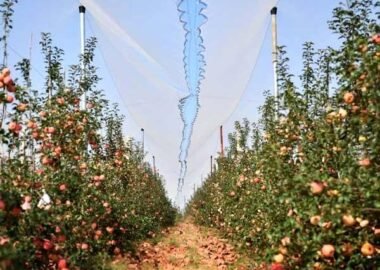
Shade screens reduce the solar radiation reaching the crop area during periods of high light. They help reduce the effects of intense sunlight and heat on the growing environment. They can be installed inside the greenhouse or on an external structure.
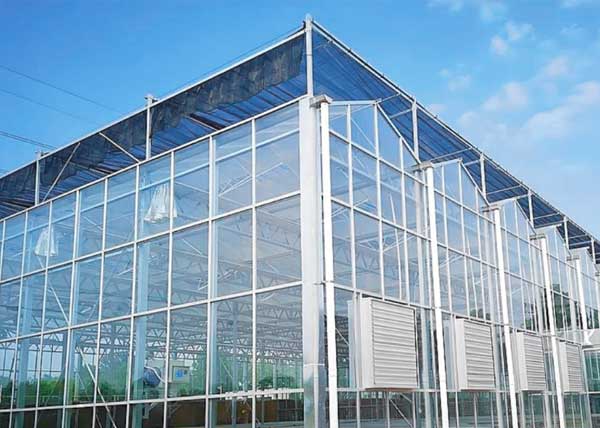
For example, INSONSHADE offers Dualite and Reflar for greenhouse shading. Dualite is an external black-and-white striped screen made from UV-protected HDPE. The series offers shading levels from 50% to 100%. Reflar is an aluminum reflective screen made from aluminum and UV-resistant polyester, with a series shading range of 50% to 99%. For projects using a more conventional HDPE shade-net solution, INSONSHADE also offers the Shadova series. Shadova KM50, for example, is a 50% shade-rate UV-stabilized HDPE monofilament option.
2. Thermal or Energy Screens
Thermal screens are mainly used in heated greenhouses to reduce heat loss toward the upper greenhouse space and covering structure at night or during cold periods. They are usually installed inside the greenhouse.
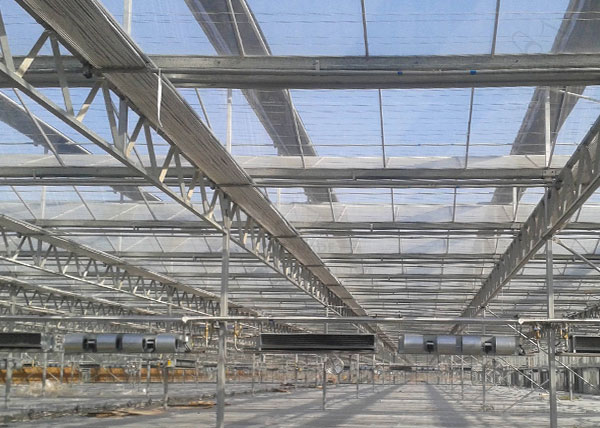
INSONSHADE offers Thermax and Transix for energy saving and heat retention. Thermax uses a combined aluminum, polyester, and polyolefin structure. The series offers energy-saving rates from 20% to 75%, making it suitable for projects that need stronger nighttime heat retention. Transix is a transparent energy-screen series, made from polyester. Its listed energy-saving range is 30% to 45% at the series level, and it is designed for projects that need heat retention while preserving high natural-light transmission.
3. Diffuse-Light Screens
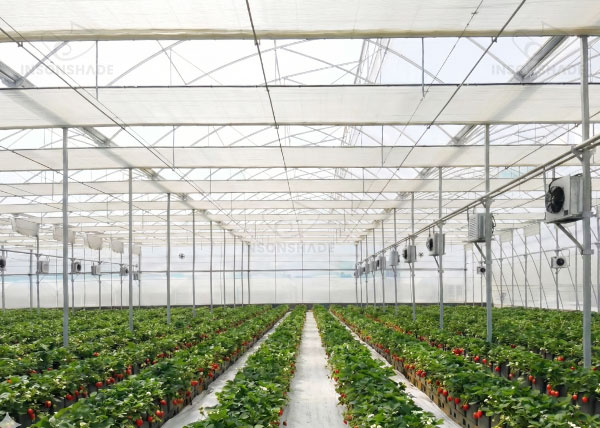
The purpose of a diffuse-light screen is not simply to reduce total light. It reduces peaks of direct light and distributes light more evenly through the crop canopy. This can be useful for projects that need more even light distribution and less exposure to localized intense sunlight. INSONSHADE’s Diffusa series is designed around this diffuse-light function.
4. Blackout Screens
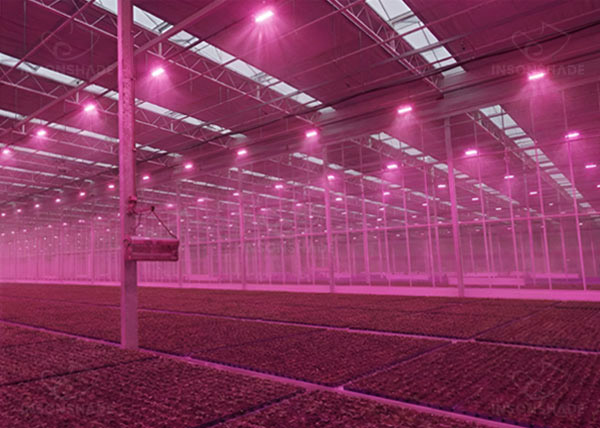
Blackout screens are mainly used for photoperiod control or to limit light escaping from greenhouses that use supplemental lighting. For these materials, achieving blackout is only the beginning. Seams and edge treatment, flame-retardant requirements, ventilation, and condensation risk should also be confirmed during project design. INSONSHADE’s Darko series is intended for greenhouse blackout and photoperiod control, with listed light-blocking performance nearly 100% for its blackout models.
5. Insect Screens
Insect screens are usually installed at ventilation openings, doors, and sidewall openings to reduce the entry of target pests. They are sometimes described as greenhouse screen mesh, but their selection logic differs from climate screens. Insect screens must be assessed around the target pest, mesh opening, air resistance, and the greenhouse’s ventilation capacity. A finer mesh often requires more careful evaluation of its effect on airflow.
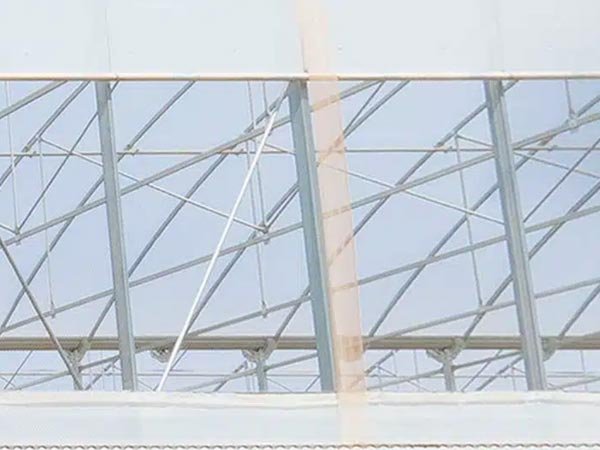
INSONSHADE’s Pestix series is intended for greenhouse and agricultural insect-net applications and is available in different mesh counts and specifications. Pestix-322515, for example, is listed with 32 × 25 mesh, a weight of 55 g/m², a 0.6 × 0.83 mm opening, and UV-stabilized HDPE construction. It can be considered for row covers, tunnels, or greenhouse sidewall applications.
Internal vs. External Screens
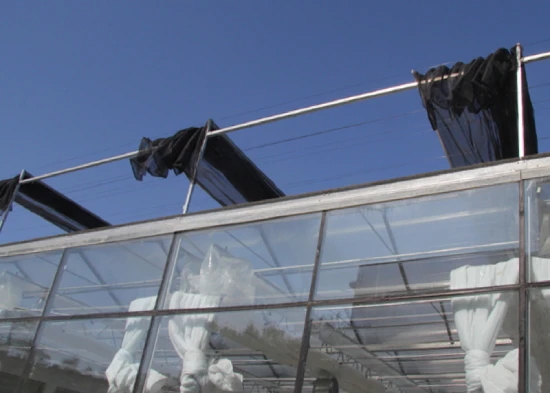
After choosing the required function, the next decision is installation position. Greenhouse screens can generally be installed either externally or internally. An external screen intercepts solar radiation before it reaches the greenhouse covering, so it is mainly used for shading and reducing daytime heat load. An internal screen is installed inside the greenhouse and is better suited to combined functions such as heat retention, light diffusion, and blackout. A project can first identify its main climate problem, then choose one approach or combine internal and external screens.
| Installation Position | Main Role | Suitable Project Conditions | Key Points to Confirm |
|---|---|---|---|
| External screen | Intercepts solar radiation outside the greenhouse and reduces the light and heat entering it | High-radiation, high-temperature regions; projects where summer cooling and shading are the first priority | External support structure, opening method, wind load, and material weather resistance |
| Internal screen | Manages light inside the greenhouse and can provide heat retention, light diffusion, or blackout | Projects needing nighttime heat retention, photoperiod control, or several functions within one curtain system | Existing curtain system, roof ventilation, humidity management, and control strategy |
If strong summer light and rapid heat gain are the main problems, an external shade screen is usually the first option to assess. If the project also requires nighttime heat retention, diffuse light, or blackout control, an internal screen may play a more important role.
In addition to roof screens, some greenhouses use side curtains at sidewalls or ventilation openings. These can provide lateral shading, help close a blackout system, or work alongside sidewall ventilation.
Open vs. Closed Structures
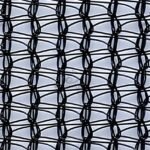
When a screen is closed, its structure directly affects whether heat and humidity can still move upward and leave the greenhouse. Greenhouse screens are often described as open-weave or closed-weave structures. An open-weave screen allows air to pass through more easily. A closed-weave screen is more effective at separating the air below the screen from the upper greenhouse space. Material selection should therefore consider both the greenhouse ventilation method and the nighttime heat-retention target.
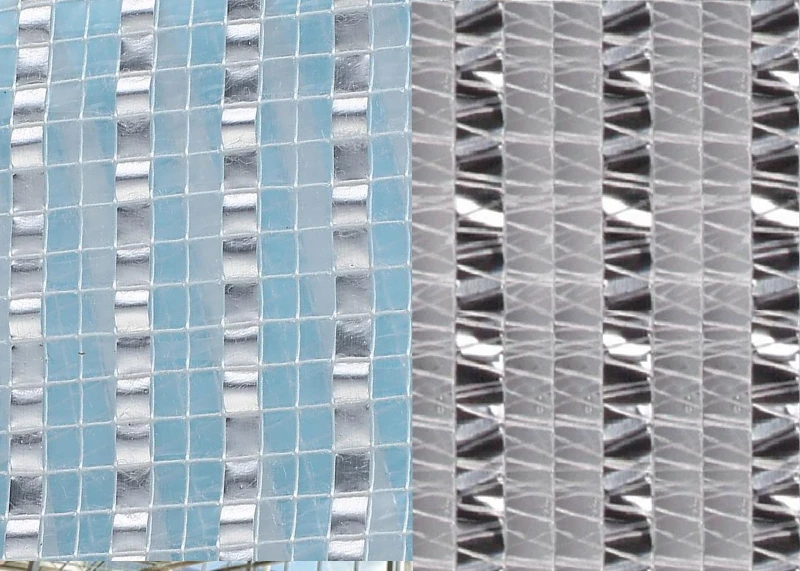
In greenhouses that rely on sidewalls, roof vents, and natural wind for air exchange, the screen usually needs to leave a path for warm air to rise and escape. An open-weave screen can suit this situation because it provides shading or light control while still allowing heat to move toward the upper greenhouse space and out through vents. In greenhouses with clear winter or nighttime heat-retention needs, a more closed screen structure can help limit heat loss, provided that it is compatible with the greenhouse ventilation strategy. When summer heat must be removed, screen position and the ventilation system can be adjusted together.
Multi-screen projects need a clear role for each layer. For example, an external shade screen may reduce intense solar radiation while an internal energy screen is used for nighttime heat retention. If both materials are too closed and are fully deployed at the same time in hot conditions, they can restrict heat release near the greenhouse roof. Before requesting a quotation, share the greenhouse ventilation method, the location of roof and sidewall vents, and how the screens will operate in summer and at night. Also explain whether the screen will work with other screen layers. This makes it easier to judge whether the screen structure and control strategy are compatible.
Final Thoughts
When a project reaches the stage of comparing materials and requesting quotations, first clarify the greenhouse’s main challenge during the critical season and whether the existing ventilation method can work with the screen. The installation position and finished dimensions should also be defined where possible. These factors directly affect the materials worth comparing, fabrication requirements, and the wider screen-system approach.
For an RFQ, you can share the greenhouse structure, climate, crop, ventilation method, target function, and size requirements with a local greenhouse-material supplier. They may have useful knowledge of local climate-control conditions and can help identify suitable screen types. If you are a local agricultural-material distributor or a commercial greenhouse operator looking to source directly from a screen manufacturer, you can also contact INSONSHADE to discuss your project requirements.