When growers compare anti-hail nets, they often start with mesh size, GSM, yarn strength, and hail protection performance. But once a project moves closer to purchasing, another practical question usually appears: should the orchard use white anti-hail nets or black anti-hail nets?
This is not only a matter of appearance. Net color can influence the orchard light environment, shading level, fruit surface temperature, and, in some cases, fruit quality. White anti-hail nets generally allow more natural light to reach the canopy, while black anti-hail nets usually provide stronger shading and reduce more direct solar radiation. For apples, kiwifruit, blueberries, grapes, and other high-value fruit crops, this difference may affect fruit color development, sunburn risk, ripening behavior, and marketable yield.
The right choice is therefore not simply “white is better” or “black is better.” It depends on whether your orchard needs to preserve more light or reduce strong sunlight and heat stress. This guide explains the key differences between white and black anti-hail nets, how net color affects orchard microclimate, and how to choose a suitable color for commercial fruit production.
White vs Black Anti-Hail Nets: What Is the Main Difference?
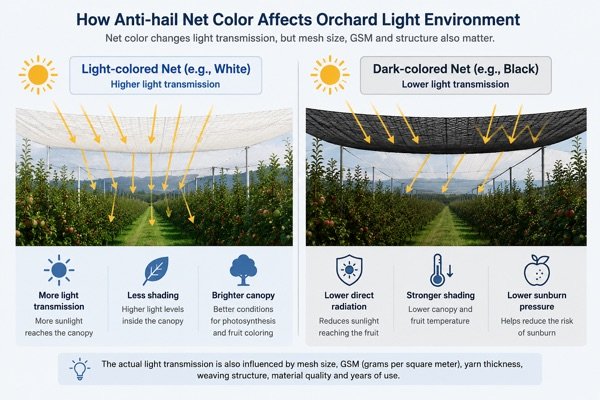
The main difference between white and black anti-hail nets is how they interact with sunlight. A white anti-hail net is lighter in color and typically allows more light to pass through, keeping the orchard environment closer to open-field conditions. A black anti-hail net is darker and usually absorbs or blocks more solar radiation, creating a stronger shading effect.
This does not mean that white nets are always better, or that black nets are always the safer choice. They support different orchard management goals. White nets are generally used when the grower wants hail protection while preserving light. Black nets are usually considered when the orchard needs stronger protection against intense sunlight, high temperatures, and fruit sunburn.
| Comparison Point | White Anti-Hail Net | Black Anti-Hail Net |
|---|---|---|
| Light transmission | Usually allows more natural light to reach the canopy | Usually reduces more solar radiation |
| Shading effect | Relatively lower shading | Stronger shading |
| Fruit surface temperature | More limited cooling and sunburn reduction effect | More helpful for reducing direct radiation and sunburn pressure |
| Fruit coloring | Better for orchards that need more light for color development | May affect coloring if shading is too strong |
| Best-fit goal | Hail protection with minimal change to light conditions | Reducing strong sunlight, heat stress, and fruit sunburn risk |
If your orchard is located in an area with enough light but relatively low sunburn pressure, a white net may help maintain the light conditions needed for tree growth and fruit ripening. If your orchard frequently faces strong sunlight, high summer temperatures, or fruit sunburn, a black net may be worth considering.
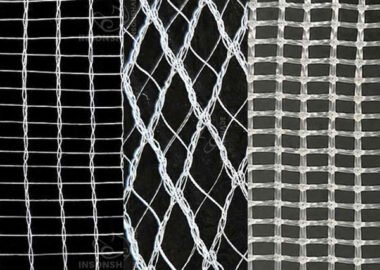
However, color is only one part of the decision. Actual light transmission and shading are also affected by mesh size, GSM, yarn thickness, weaving structure, installation height, and years of use. When comparing white and black anti-hail nets, always compare the full product specification instead of judging by color alone.
How Anti-Hail Net Color Affects Orchard Light, Heat, and Fruit Quality
Once an anti-hail net is installed above an orchard, it changes both the amount and distribution of light entering the canopy. Different net colors reflect, absorb, and scatter sunlight in different ways. These changes can influence canopy light, fruit surface temperature, and the growing environment around the fruit.
1. Light Transmission
Fruit trees need light for photosynthesis, sugar accumulation, fruit development, and color formation. If a net blocks too much light, the interior canopy may become darker, and some fruit may show weaker ripening or color development.
Light-colored anti-hail nets are often suitable for orchards that need to preserve natural light. For example, in regions where sunlight is moderate, or where fruit color development depends strongly on light exposure, white or transparent nets are often considered.
Dark-colored nets reduce more incoming light. In high-radiation regions, this can be an advantage. But in orchards that already have limited light, excessive shading can create new problems.
2. Fruit Surface Temperature and Sunburn Risk
Under strong sunlight and high temperatures, fruit surface temperature can rise quickly. Long exposure to high radiation may lead to sunburn, which reduces fruit appearance, marketable yield, and commercial value.
Black anti-hail nets generally provide stronger shading, so they can reduce the amount of direct solar radiation reaching the fruit. In orchards where summer heat and sunburn are frequent problems, black or other dark-colored nets may help reduce heat stress.
That said, more shade is not always better. If the net blocks too much light, it may affect tree vigor, flower bud formation, fruit coloring, and ripening timing. The goal is to balance sunburn protection with the crop’s light requirement.
3. Fruit Appearance and Quality
Net color may also affect fruit appearance and quality. Research on apples, blueberries, and kiwifruit suggests that photo-selective protective nets can influence light quality, microclimate, ripening, sunburn, fruit color, yield, and other quality traits.
For example, a Washington State University summary of research on “Honeycrisp” apples reported that pearl, blue, and red photoselective nets reduced several light bands compared with an uncovered control, and that red and blue nets produced more sunburn-free fruit in the study conditions. This supports a practical point for growers: net color should be evaluated as part of orchard light management, not only as a visual preference.
At the same time, results are not universal. The same color may perform differently depending on crop type, latitude, climate, variety, canopy structure, irrigation, pruning, and net specification. One orchard may prioritize reducing sunburn and increasing marketable fruit, while another may be more concerned about maintaining fruit color and ripening speed.
The practical takeaway is simple: net color should be evaluated together with crop and climate. Before choosing a color, identify the orchard’s main challenge. Is the key problem hail damage, sunburn, excessive heat, insufficient light, weak fruit coloring, or unstable ripening? Color selection becomes much clearer once the main production risk is defined.
Other Common Anti-Hail Net Colors and Their Use Cases
White and black are among the most common anti-hail net colors, but commercial orchards may also use grey, green, blue, red, pearl, or transparent nets. These colors are not only decorative. In some projects, they are used to adjust shading, diffused light, or the light spectrum inside the canopy.
| Anti-Hail Net Color | Main Characteristics | Suitable Orchard Goal |
|---|---|---|
| White | Usually higher light transmission and less change to natural light | Hail protection while preserving natural light |
| Black | Usually stronger shading and more reduction of solar radiation | Lowering strong sunlight, heat stress, and sunburn risk |
| Grey | More balanced between shading and light transmission | Combining sun protection with moderate light retention |
| Green | Changes the light spectrum entering the canopy | Projects with local experience in spectral light management |
| Blue | May adjust blue light ratio and canopy light conditions | Projects aiming to influence growth or fruit quality through light quality |
| Red / red-white | May change red and far-red light conditions | Projects focused on color development, ripening, or spectral management |
| Pearl | Often associated with stronger light scattering | Improving diffused light inside the canopy and supporting fruit exposure |
| Transparent / crystal | Preserves more natural light with lower shading impact | Mainly hail protection with minimal light modification |
If a project does not have a clear spectral management goal, color should not be chosen only because it looks different. For most commercial orchards, the decision should still be based on crop requirements, climate, sunburn pressure, light level, and net specification. If you are still comparing broader orchard netting types, it is useful to separate hail protection, bird protection, insect control, and shade management before choosing a product.
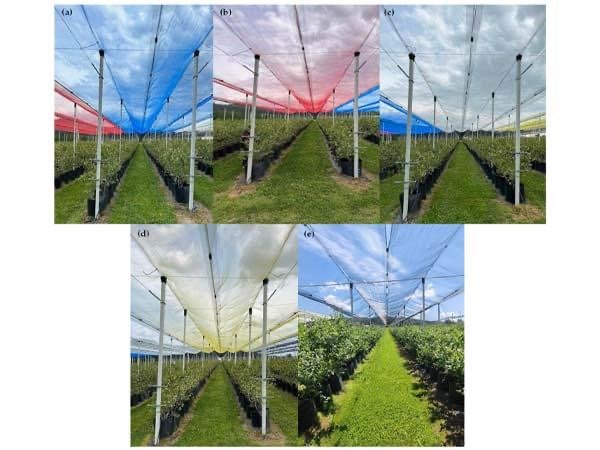
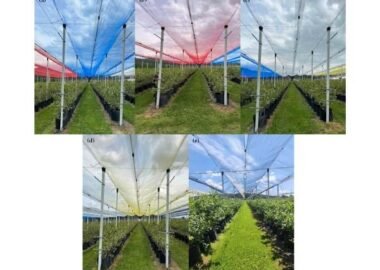
The image above is based on Figure 1 from the 2025 Agronomy study on differently colored photoselective nets for potted highbush blueberries, which illustrates blue, red, pearl, yellow, and black net treatments used under commercial-style orchard conditions.
How to Choose the Right Anti-Hail Net Color for Your Orchard
The best way to choose anti-hail net color is not to start with the question, “Which color is best?” A better question is, “What problem does this orchard need to solve?”
If the orchard is located in a region with intense sunlight, high summer temperatures, or frequent fruit sunburn, black, grey, or other higher-shading nets may be more suitable. These nets can reduce direct radiation on fruit surfaces and help protect fruit appearance, especially in projects where marketable yield is a key priority.
If the orchard is more concerned about insufficient light, poor fruit coloring, or delayed ripening, be careful with dark nets that create strong shade. White, transparent, or pearl nets may be more suitable because they usually preserve more light or help distribute light more evenly within the canopy.
If you grow fruit that is sensitive to light exposure and color development, such as some apple varieties, pay close attention to the light conditions under the net. The net should protect against hail without seriously disrupting the light environment needed for fruit maturity and color.
If your orchard has high hail risk but limited summer heat stress, the color decision may lean toward light transmission and basic protection. In this case, white or transparent anti-hail nets may keep the orchard environment closer to open-field conditions than darker nets.
Color must also be considered together with net specification. Two black anti-hail nets can have different shading rates if their mesh size, GSM, yarn diameter, or weaving structure is different. Likewise, a white net with a smaller mesh or heavier GSM may still create noticeable shade.
Before purchasing, confirm at least the following:
- Local light intensity, summer temperature, and sunburn pressure
- Fruit type, variety, and fruit coloring requirement
- Main project goal: hail protection, sunburn reduction, light preservation, or integrated climate management
- Mesh size, GSM, yarn diameter, weaving structure, and shade rate
- Whether the supplier can provide samples, technical parameters, or project recommendations
Once these factors are clear, color selection becomes a technical decision rather than a matter of habit or appearance.
What Research Suggests About Anti-Hail Net Color
Research from universities and agricultural institutions shows that photo-selective protective nets can change orchard microclimate and fruit performance, but the result depends heavily on crop, climate, and management system.
In apple production, one study on four photo-selective colored hail nets in a Loess Plateau apple orchard compared white, blue, black, and green nets across microenvironment, tree growth, fruit quality, and yield. The study reported that shading effects generally followed the order black, green, blue, and white, and that net color influenced light quality and soil temperature under the tested orchard conditions.
For blueberries, a 2025 study on differently colored photoselective nets for potted highbush blueberries evaluated blue, red, pearl, yellow, and black nets. It found that net color affected microclimate, shoot growth, yield, ripening timing, and fruit traits, with the red net performing best for several agronomic and fruit-size traits under the study conditions.
For kiwifruit, research on “Hayward” kiwifruit under photo-selective nets found that pearl, yellow, and grey nets changed radiation conditions and influenced yield and fruit grade, while fruit quality parameters were not strongly affected in that trial.
These studies should not be simplified into one universal rule such as “blue is best” or “black is best.” A better conclusion is that anti-hail net color is part of orchard light-environment management. If your orchard has clear requirements for sunburn control, fruit color, ripening, yield, or quality, net color should be included in the project design from the beginning.
FAQ
1. Is a white anti-hail net always better than a black anti-hail net?
No. A white anti-hail net usually preserves more light and is suitable for orchards that want to reduce shading impact. A black anti-hail net usually provides stronger shading and is more suitable for orchards facing intense sunlight, high temperatures, or sunburn risk. The better choice depends on crop, climate, and project goals.
2. Can a black anti-hail net reduce fruit sunburn?
In many cases, yes. A black anti-hail net can reduce the amount of direct solar radiation entering the orchard, which may help lower fruit surface heating and sunburn pressure. However, if shading is too strong, it may also affect fruit color and ripening, so the final decision should be based on the net’s actual specification.
3. Which anti-hail net color is better for apple orchards?
Apple orchards need to balance hail protection, sunburn management, and fruit coloring. If sunburn is a serious local problem, a stronger-shading color may help. If fruit color and ripening are the main concerns, a light-colored, transparent, or pearl net may be more suitable.
4. Does anti-hail net color affect fruit coloring?
It can. Net color changes light intensity and light quality inside the canopy, and light conditions are closely related to the color development and maturity of many fruits. The actual effect depends on variety, latitude, climate, pruning, canopy density, and net specification.
5. Is net color more important than mesh size?
Both matter, but they affect different things. Color mainly affects light, shade, heat, and the orchard microclimate. Mesh size affects hail protection, airflow, light transmission, and structural performance. In real projects, color, mesh size, GSM, yarn diameter, shade rate, and weaving structure should be evaluated together.
6. What specifications should I compare before buying anti-hail nets?
Before buying anti-hail nets, compare the net color, mesh size, GSM, yarn diameter, shade rate, and weaving structure. If possible, also ask for samples or technical data so you can understand how the net performs under your orchard conditions, not only how it looks in a product photo.
Conclusion
The right anti-hail net color should match the orchard’s production risk, not just a color preference. In general, lighter nets are more suitable when preserving canopy light is the priority, while darker nets are more suitable when reducing radiation and sunburn pressure is more important.
Before making a final decision, compare the crop type, local climate, latitude, light conditions, sunburn pressure, and net specification. If you are not sure whether to choose white, black, or another anti-hail net color, INSONSHADE can help review your orchard location, crop type, sunburn situation, and project goal, then compare color, mesh size, GSM, shade rate, and weaving structure for a more suitable commercial orchard netting solution. You can also contact INSONSHADE for project-specific recommendations and sample support.
References
- Washington State University Tree Fruit: Photoselective Protective Netting Improves “Honeycrisp” Fruit Quality
- Horticulturae: Effects of Four Photo-Selective Colored Hail Nets on an Apple Orchard Microenvironment, Tree Growth, Fruit Quality, and Yield
- Agronomy: Differentially Colored Photoselective Nets as a Sophisticated Approach to Improve the Agronomic and Fruit Quality Traits of Potted Blueberries
- Horticulturae: Effect of Photo-Selective Nets on Yield, Fruit Quality and Psa Disease Progression in a “Hayward” Kiwifruit Orchard