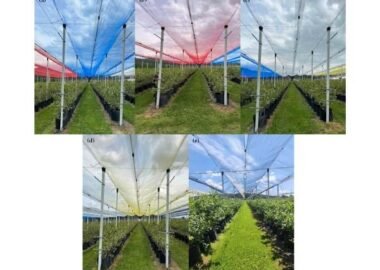
When people search for orchard netting, the first product that often comes to mind is bird netting. This makes sense. Birds can cause visible fruit loss, and covering trees with netting is one of the most direct ways to protect crops before harvest.
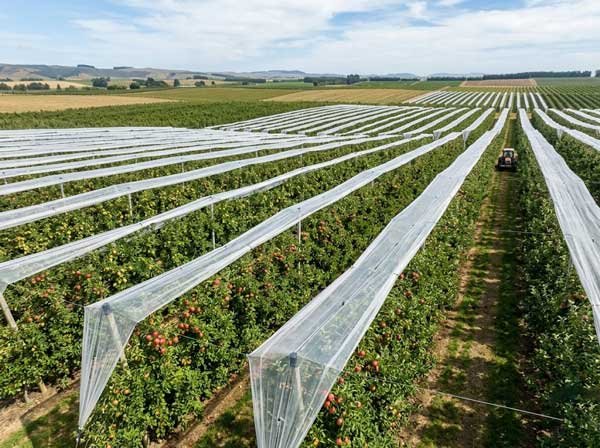
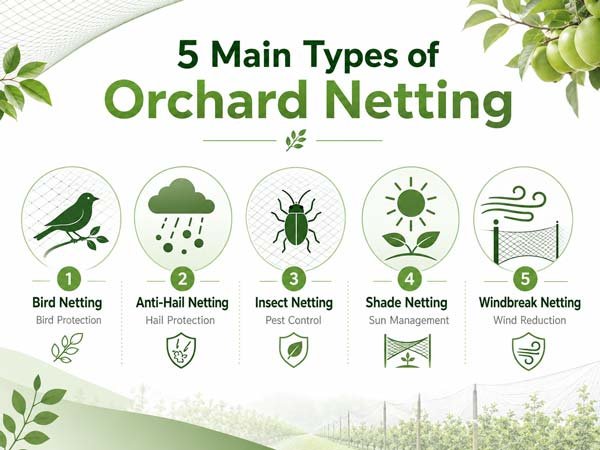
But in commercial orchards, orchard netting is not only about keeping birds away. Different types of netting can be used to reduce hail damage, limit insect pressure, manage strong sunlight, reduce wind impact, and protect fruit quality during the growing season. In this guide, we will look at the main types of orchard netting, what each type is used for, and what commercial growers or bulk buyers should check before purchasing.
Orchard Netting Is Not Only for Birds
Bird netting is one of the most common types of orchard netting, and it is often the first option growers consider. However, bird damage is only one part of orchard protection. In many commercial orchards, growers also need to deal with hail, excessive sunlight, insects, wind, and fruit surface damage. These risks do not affect the orchard in the same way, so they cannot always be solved by the same netting product.
For example, a net designed mainly for bird protection may have a larger mesh size and good physical coverage, but it may not be strong enough for regular hail events. A shade net may help reduce heat stress and sunburn risk, but if the shade rate is too high, it may also affect fruit coloring or growth. Insect netting usually requires a finer mesh, but this can also affect airflow in the orchard if the structure is not properly planned.
Main Types of Orchard Netting
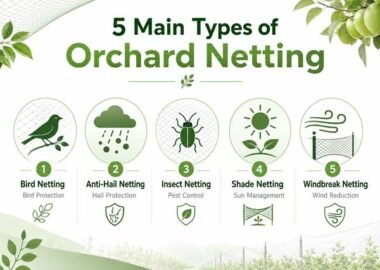
So, apart from bird netting, what other types of netting are commonly used in large orchard projects? Based on INSONSHADE’s recent sales experience and customer inquiries over the past five years, the following types are among the most frequently requested orchard netting solutions.
1. Bird Netting
Bird netting is the most familiar type of orchard netting. It is mainly used to stop birds from reaching the fruit before harvest. This type of netting is especially common for crops such as blueberries, cherries, grapes, strawberries, and other fruits that are attractive to birds during the ripening stage.
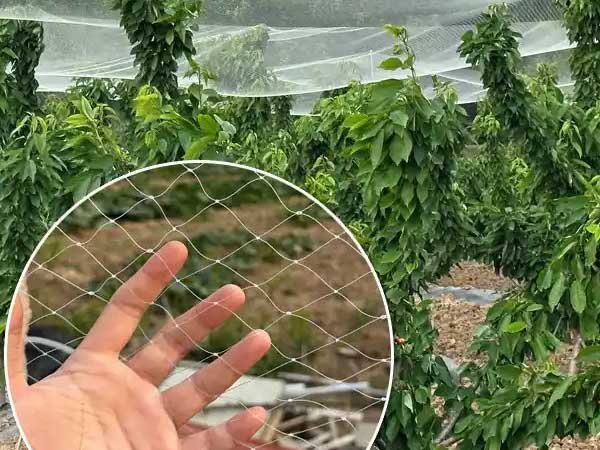
When choosing bird netting, mesh size is one of the first details to check. The openings need to be small enough to prevent target birds from entering, but the net should still be easy to install, remove, or maintain depending on the orchard system. For commercial orchards, strength, roll width, UV resistance, and edge reinforcement also matter, especially when the netting is used over a large area or for multiple seasons.
2. Anti-Hail Netting
In fruit production, hail can cause direct impact damage to fruit, leaves, shoots, and branches. Even a short hail event can reduce the commercial value of a crop, especially for apples, cherries, pears, and other fruits where surface quality is important. Anti-hail netting is designed to reduce this kind of damage.
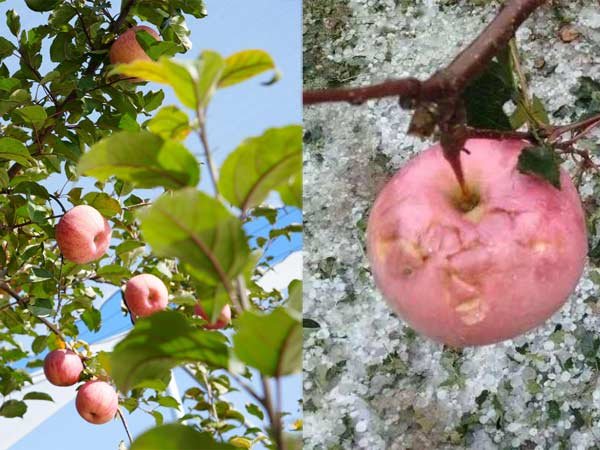
Compared with standard bird netting, anti-hail netting usually needs higher strength and a more stable support system to absorb and spread the impact force of hail while staying properly tensioned. In some cases, anti-hail netting may also provide some bird protection, depending on the mesh structure and installation method.
3. Insect Netting
Insect netting is used when the concern is changed to pest pressure. Compared with bird netting, it usually has a much finer mesh because it needs to block smaller insects from entering the protected area.
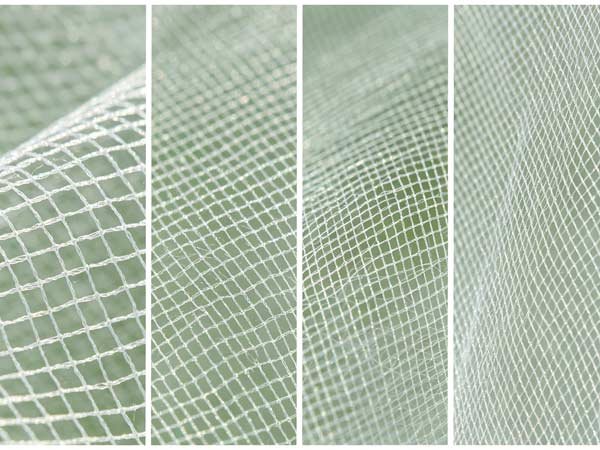
However, finer mesh also brings another question: airflow. If the mesh is too tight or the installation area is not planned well, it may reduce ventilation around the trees. In warm or humid regions, this can affect the orchard microclimate. For this reason, insect netting should be selected not only by the size of the pest but also by considering air movement, light transmission, and local climate conditions.
4. Shade Netting
Shade netting is used to manage excessive sunlight and heat in specific orchard conditions. For example, it may be used during young tree establishment, nursery production, or in regions with strong solar radiation and high temperatures, which can increase the risk of sunburn, water stress, and fruit-quality problems. A suitable shade net can help reduce direct sunlight and create a more stable growing environment for sensitive crops or growth stages.
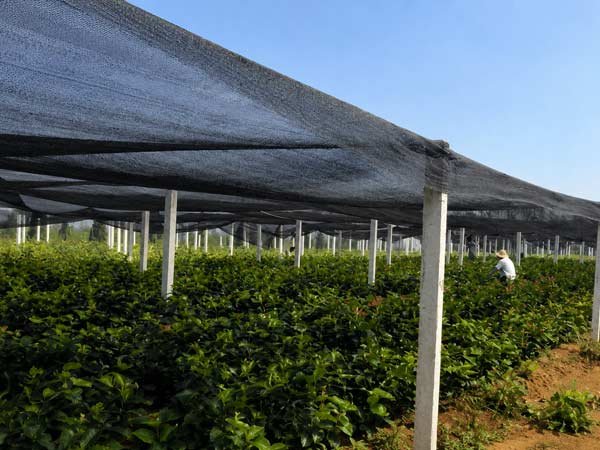
The key specification for shade netting is the shade rate. A higher shade rate does not always mean a better result. If too much light is blocked, fruit coloring, sugar development, and overall growth may be affected. The right shade percentage depends on the crop, climate, growing stage, and local sunlight intensity. Color is another factor worth considering, because different colors can influence light transmission and orchard temperature in different ways.
5. Windbreak Netting
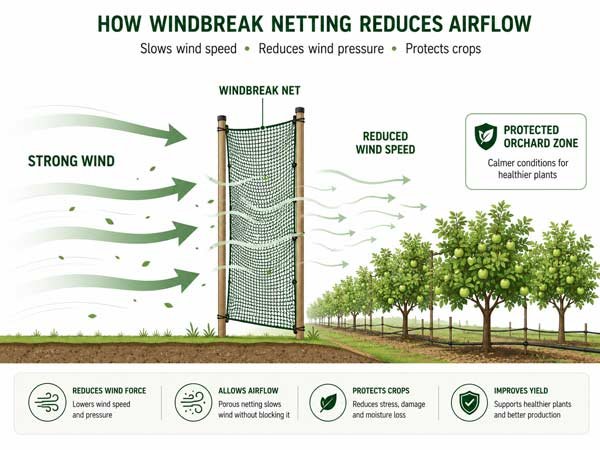
Windbreak netting is used to reduce wind speed around the orchard. Strong wind can damage young trees, affect flowering and fruit set, increase water loss, and cause fruit rubbing or surface scarring. In exposed orchards, wind control can be an important part of fruit quality management. A good windbreak net should not block all airflow. Instead, it should reduce wind speed gradually while allowing some air to pass through. If the net is too dense, it may create turbulence or pressure behind the barrier.
6. Multi-Purpose Orchard Netting
Some orchard netting products are designed to provide more than one type of protection. For example, a net may reduce bird damage while also offering partial hail protection. Another net may provide light shading while also reducing wind impact. However, multi-purpose does not mean one net can solve every problem perfectly.
How to Choose the Right Orchard Netting for Your Fruit Trees
Choosing orchard netting should start with the problem you need to solve. Two nets may both be called orchard netting, but they may perform very differently in the field if their mesh size, strength, shade rate, or installation method do not match the orchard conditions.
1. The first step is to identify the main risk you face
If birds are causing the most visible fruit loss, bird netting may be the priority. If hail events are common in your region, anti-hail netting and a proper support structure should be considered first. If your orchard is in a hot, high-radiation area, or if you are protecting young trees or nursery plants, shade netting may be more relevant. If pest pressure is the main concern, insect netting with a suitable mesh size may be needed.
| Main Orchard Problem | Suitable Netting Type | Key Points to Check |
| Bird damage | Bird netting | Mesh size, coverage, roll width, UV resistance |
| Pest pressure | Insect netting | Mesh size, airflow, light transmission, pest type |
| Hail risk | Anti-hail netting | Tensile strength, support system, UV stability, slope design |
| Strong sunlight or heat | Shade netting | Primary risk, secondary benefits, and installation method |
| Wind damage | Windbreak netting | Porosity, height, edge reinforcement, fixing strength |
| Multiple risks | Multi-purpose netting | Porosity, height, edge reinforcement, and fixing strength |
2. The second step is to consider the crop itself.
Blueberries, cherries, grapes, apples, pears, and citrus do not always face the same protection needs. Some fruits are more attractive to birds. Some are more sensitive to surface damage. Some require strong light for color development, while others may need protection during young growth stages. This is why the same netting solution may work well in one orchard but not be suitable for another.
| Crop Type | Common Protection Needs | Netting Types Often Considered |
| Blueberries | Bird damage, fruit loss before harvest | Bird netting, multi-purpose netting |
| Cherries | Bird netting, anti-hail netting, rain or multi-purpose covers, depending on the system | Bird netting, anti-hail netting, rain or multi-purpose covers depending on the system |
| Grapes | Bird damage, sun exposure, wind impact | Bird netting, shade netting, windbreak netting |
| Apples | Hail damage, sunburn, and fruit surface quality | Anti-hail netting, shade netting, multi-purpose orchard netting |
| Pears | Hail damage, wind rubbing, and fruit surface marks | Anti-hail netting, windbreak netting |
| Citrus | Wind damage, sunburn in hot regions, and young tree protection | Windbreak netting, shade netting |
| Young fruit trees or nursery plants | Heat stress, transplant stress, and strong sunlight | Shade netting, windbreak netting |
3. Local climate is another important factor.
In areas with strong UV exposure, the netting must have reliable UV stabilization for long-term outdoor use. In windy areas, tensile strength, edge reinforcement, and fixing methods become more important. In humid or hot regions, ventilation should also be considered, especially when using fine insect netting or dense shade netting.
| Region or Growing Area | Common Climate Pressure | Netting Types Often Considered |
| Northern Italy, South Tyrol, Trentino-Alto Adige | Frequent hail risk in apple-growing areas | Anti-hail netting |
| Washington State, USA | High light intensity, sunburn risk, dry summer conditions, plus hail/wind/bird pressure | Protective netting, shade-related netting, anti-hail netting |
| Hail events, wind marking, and sunburn risk in fruit production | Birds, fruit bats, hail, sunburn, wind exposure | Strong radiation, heat stress, water stress, and fruit external quality concerns |
| South Africa Western Cape, Langkloof, Koue Bokkeveld | Bird netting, anti-hail netting, shade netting, and multi-purpose orchard covers | Anti-hail netting, windbreak netting, shade netting |
| Mediterranean or semi-arid orchards | Strong radiation, heat stress, water stress, fruit external quality concerns | Shade netting, photoselective netting |
| Warm and humid regions | Pest pressure, airflow, and disease management concerns | Insect netting with careful ventilation planning |
4. Installation method and service life should also be part of the decision.
A temporary throw-over net for seasonal bird protection has different requirements than a permanent orchard-covering system. Large commercial orchards may need wider rolls, custom lengths, reinforced edges, and a consistent supply for project installation. For bulk buyers, choosing the right specification up front can reduce later problems with installation, maintenance, and replacement.
Conclusion
Orchard netting is not just bird netting. The right choice depends on what your orchard needs to protect against first.
Before buying, growers and bulk buyers still need to answer a few practical questions, such as: What is the main risk in the growing area? What crop will the net protect? What mesh size, shade rate, strength, width, and UV stability are required? And will the net be used for temporary seasonal protection or for a long-term orchard-covering system?
If you are looking for orchard netting for commercial orchards, agricultural projects, or wholesale supply, INSONSHADE can help you evaluate suitable netting options based on your crop type, target protection needs, installation method, and bulk order requirements. We provide customized agricultural netting solutions for buyers seeking stable quality, practical specifications, and reliable supply for large-scale orchard protection.