Heating can be a major operating cost for commercial greenhouses in cold regions. To maintain the temperature crops need, growers must continually replace the heat lost through the greenhouse structure. How to reduce that heat loss and keep heating costs down is therefore an important question for greenhouse operators.
To help retain heat, many glass and multi-span greenhouses install thermal screens above the growing area. These are a type of greenhouse climate screen and are also known as energy screens or energy curtains.
An automated screen system, however, uses an electric motor to open and close the screens. If the system itself consumes energy, how can it help the greenhouse save energy?
This article answers that question by explaining how climate screens help reduce heating needs in cold weather, and how some screens can also support cooling when sunlight and temperatures are high.
At a Glance: How Do Climate Screens Save Energy?
Climate screens do not produce energy. Instead, they are deployed above the crops to change how heat moves through the greenhouse. This can reduce the amount of heat that the heating or cooling system needs to handle.
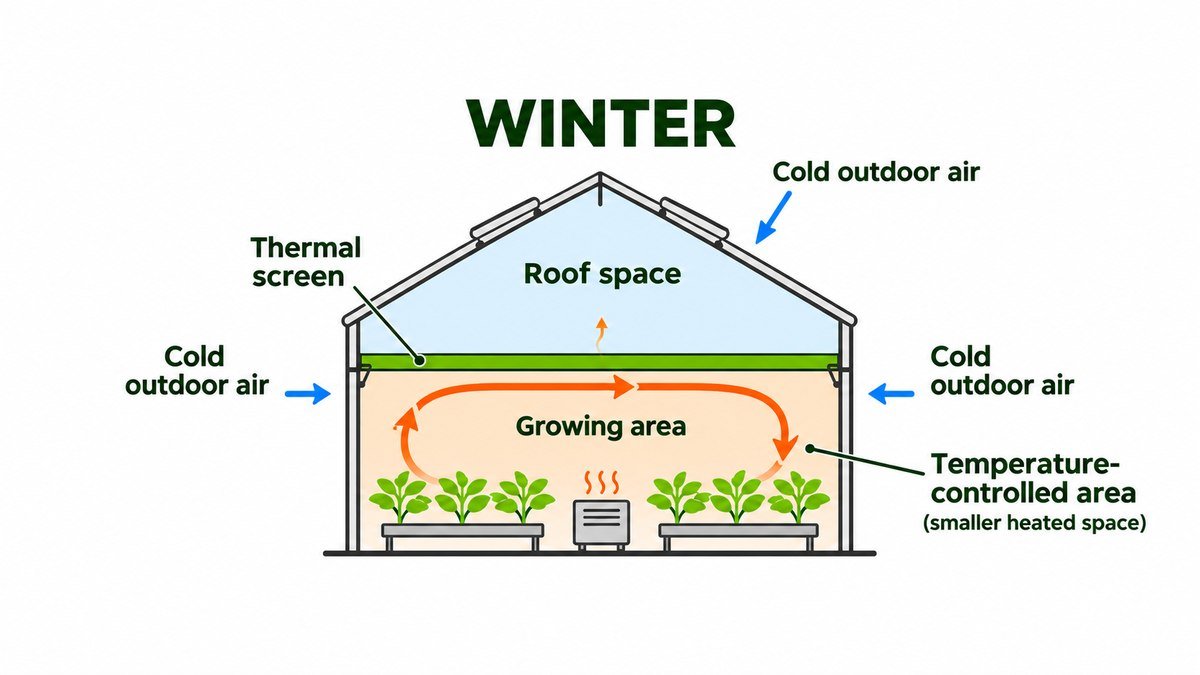
In cold weather or at night, thermal screens help reduce heat loss from the growing area. They also separate the growing area from the space below the roof. With a suitable heating arrangement, this can reduce the space that needs to be kept at the crop’s target temperature. As a result, the heating system has less heat to replace, giving growers an opportunity to lower their heating costs.
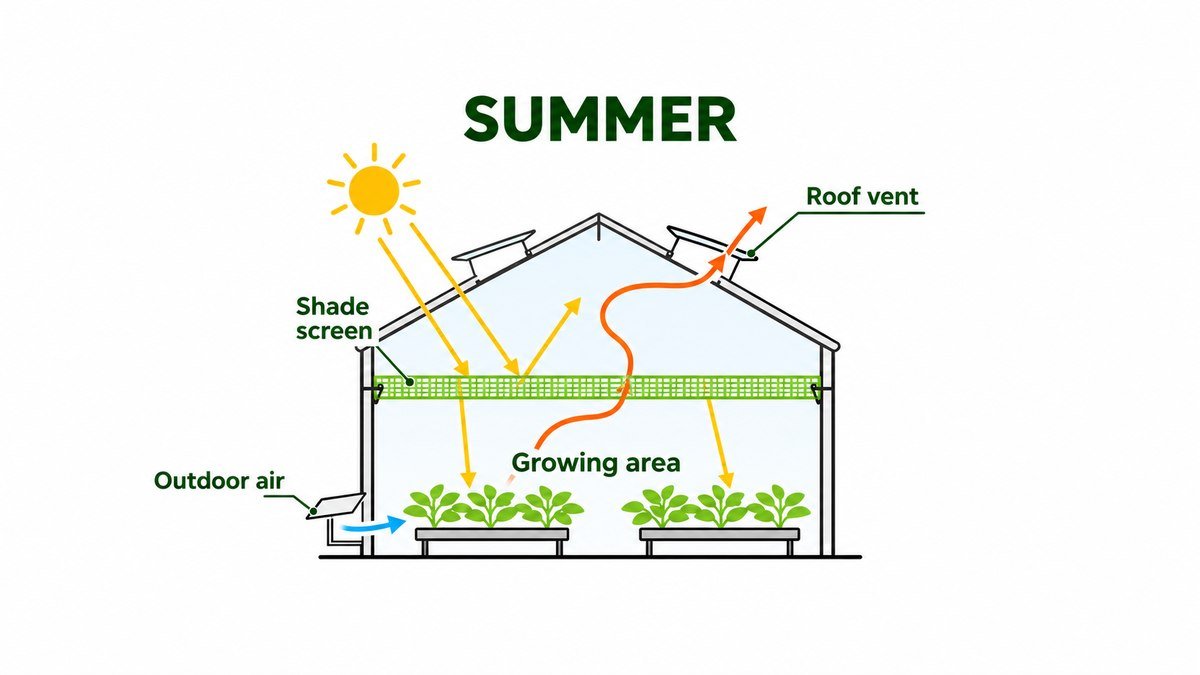
When sunlight is strong and temperatures are high, some screens provide shade or reflect solar radiation, reducing the amount that reaches the crops. If the greenhouse uses fans or other cooling equipment, this may also reduce cooling demand.
The screen system uses electricity to open and close, but the screens may help the greenhouse use less energy for heating or cooling. If total energy use is lower after accounting for the screen system’s electricity use, the greenhouse has achieved a net energy saving.
The following sections explain how screens help reduce heating and cooling needs in different seasons.
How Do Climate Screens Reduce Heating Needs in Cold Weather?
In cold weather, commercial greenhouses need a continuous supply of heat to keep the growing area at the temperature crops require. At the same time, heat moves upward from the growing area and escapes through the roof and other parts of the greenhouse covering. To maintain the set temperature, the heating system must replace that lost heat.
When a thermal screen is deployed above the crops, it separates the growing area from the space below the roof. This helps slow heat loss and allows heating to be concentrated around the crops. [1]
Slowing Heat Loss from the Growing Area
When the screen is retracted, warm air can move from the growing area into the upper part of the greenhouse, and heat can escape through the roof.
A deployed screen creates an additional barrier between the crops and the roof. A closed-structure thermal screen has fewer open passages in the fabric, limiting airflow and reducing air exchange between the growing area and the colder space above. The screen material also affects thermal radiation exchange between these areas, helping reduce heat loss from crops and surfaces inside the greenhouse. [2]
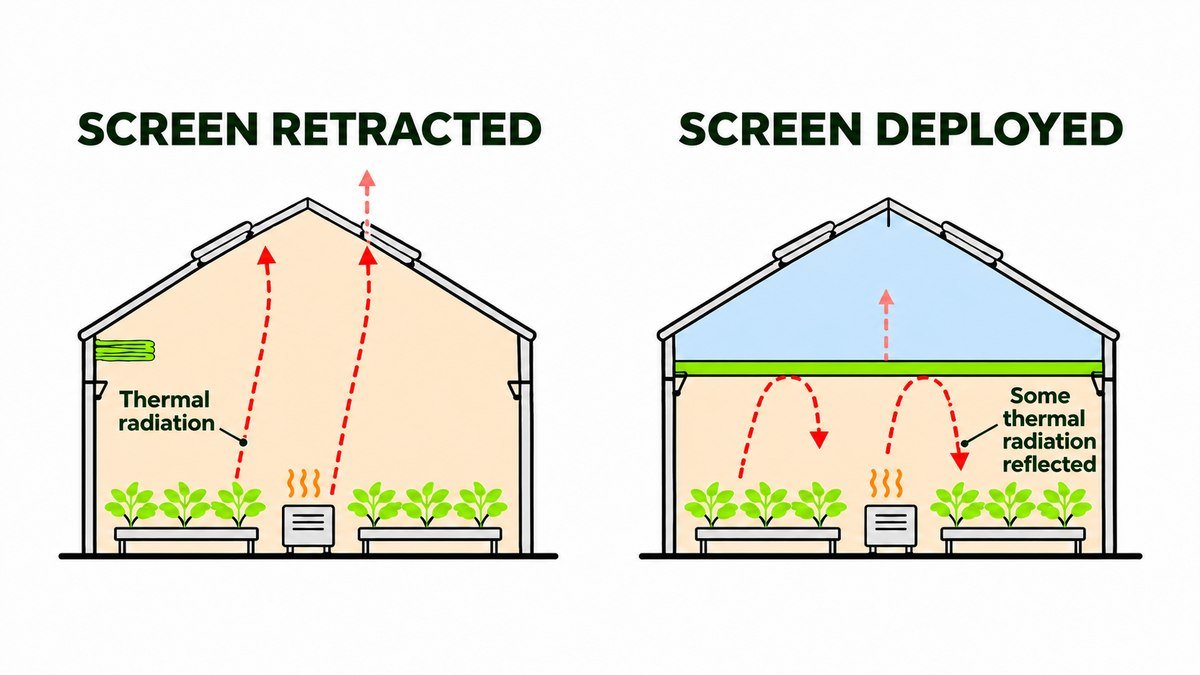
With more heat retained around the crops, the heating system has less heat to replace. This can reduce heating energy use and costs.
Reducing the Space Kept at the Crop’s Target Temperature
The space between the screen and the greenhouse roof is separated from the growing area when the screen is deployed.
If the heating equipment is mainly located below the screen, heating can be concentrated around the crops. The space above the screen does not need to be kept at the same temperature as the growing area. This reduces the space that needs to be heated and maintained at the crop’s target temperature.
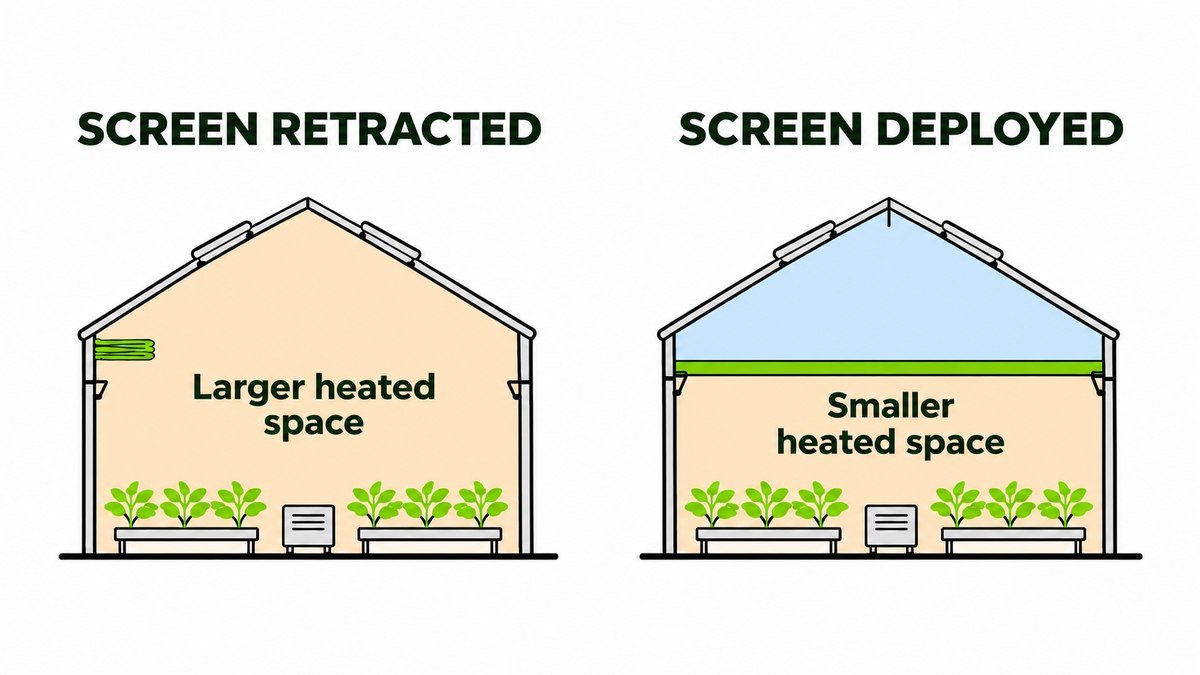
In a greenhouse with a high roof, a screen can help keep more heat where the crops need it. The heating system may then need to supply less heat, reducing the cost of gas, electricity or other heating energy.
How Can Climate Screens Help Reduce Cooling Energy Use in Summer?
On sunny summer days, solar radiation enters the greenhouse and warms the air, floor and other surfaces. If the temperature rises above the range suitable for the crops, growers need to remove excess heat through ventilation or cooling equipment.
Some screens provide shade or reflect solar radiation. When deployed above the crops, they reduce the amount of radiation reaching the growing area and help limit heat buildup around the plants. Used together with ventilation and cooling equipment, a screen may also reduce the amount of heat the cooling system needs to handle.

In a greenhouse with fans, evaporative cooling or other active cooling equipment, a lower heat load may allow the equipment to run for less time or at a lower setting. This can reduce some of the energy used for cooling. [4]
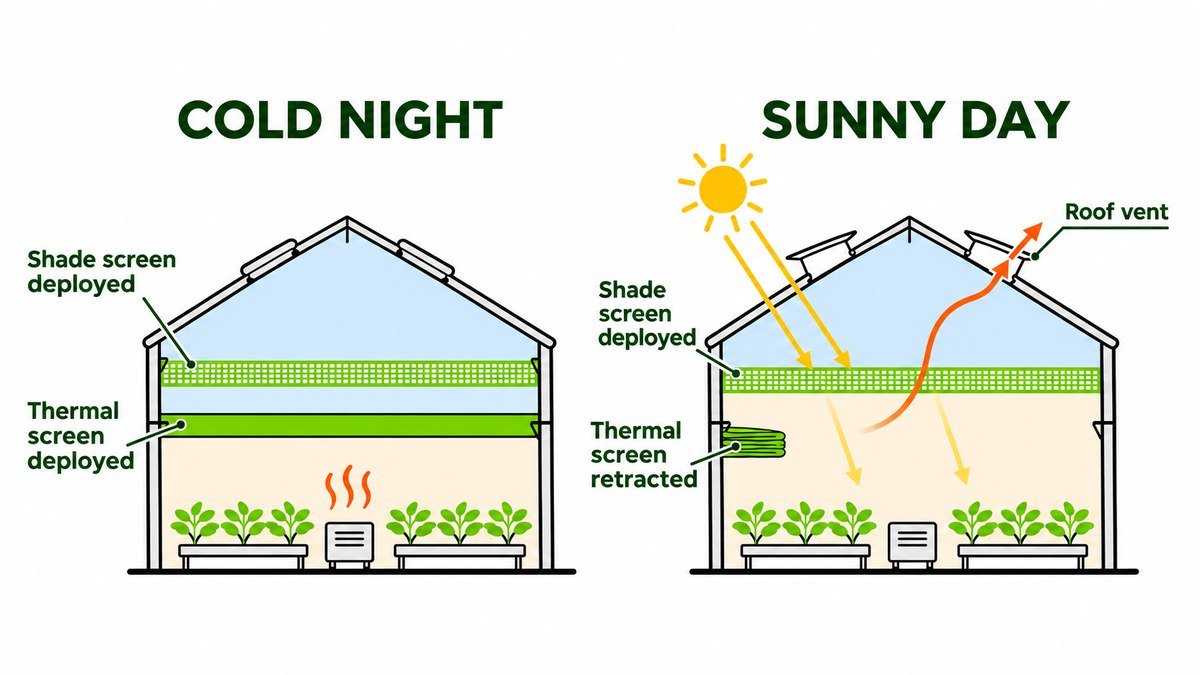
Screens can also work with the ventilation system. An open-structure screen provides shade while allowing air to pass through. With the roof vents open, some warm air can move upward through the screen and leave the greenhouse. This allows growers to manage light around the crops while using ventilation to remove heat.
How Can Two Screens Work Together?
Some commercial greenhouses use two screens to meet different climate-control needs. For example, one layer can be a closed-structure thermal screen that reduces heat loss in cold weather. The other can be an open-structure shade screen used during strong sunlight and operated alongside greenhouse ventilation.
The two screens can be controlled separately. Growers may deploy the thermal screen on a cold night and use the shade screen during a bright day. When both heat retention and shade are needed, the screens can also be used together. In cold conditions, deploying both layers is another possible operating strategy. [5]
What Affects the Energy Savings Achieved with Screens?
Screen specifications often include an energy-saving rating, but this figure is not the same as the percentage of energy a greenhouse will save over a year. Actual savings depend on when the greenhouse needs heating or cooling and how the screens are installed and used.
For a closer look at published studies and annual results, read How Much Energy Can Greenhouse Thermal Screens Save Annually?
| Factor | How it affects energy savings |
|---|---|
| Local climate and crop requirements | In regions with cold winters and longer heating seasons, screens generally have more opportunities to reduce heat loss. The temperature required by the crops also affects heating demand. |
| Screen selection and installation | Materials and structures differ in their ability to retain heat. Large gaps around the edges of a screen can allow warm air to move into the space above, reducing its insulating effect. |
| Screen deployment and controls | Deploying screens in cold conditions helps retain heat around the crops. When more light or ventilation is needed, growers can adjust the screens to suit crop and climate conditions. |
| Heating, ventilation and cooling systems | The layout and operation of these systems affect how they work with the screens and how much energy the greenhouse ultimately saves. |
How Do You Choose Climate Screens?
If reducing heating costs in cold weather is the main goal, a closed-structure thermal screen is a good place to start. The next step is to consider the greenhouse curtain system and the crops’ light requirements when selecting a material.
Some growers want to retain heat while maintaining high light transmission. Others need screens that also provide shade or diffuse light. If the greenhouse has different climate-control needs across the seasons, two screens can be used to provide separate heat-retention and shading functions.
To explore thermal screens and related products, visit our greenhouse thermal screens and energy curtains page.
References
- University of Massachusetts Amherst: Selecting an Energy/Shade Screen System
- Wageningen University & Research: Quantifying Energy Saving by Screens — The Role of Humidity Transport
- University of Connecticut: Shade for Summer Cooling
- Frontiers in Energy Research: Optimal Energy-Efficient Shade Screen and Ventilation Control Settings
- University of Massachusetts Amherst: Energy and Shade Screen Systems for Greenhouses