Why Light Distribution Matters in Greenhouses
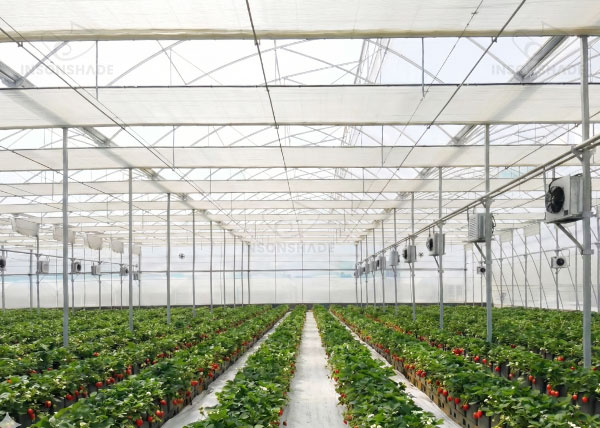
In commercial greenhouses, crop performance is not only affected by the amount of light entering the structure. It also depends on how that light is distributed within the crop canopy. Direct sunlight usually enters from one strong direction. This can cause the upper leaves to receive too much light, while the middle and lower leaves remain shaded.
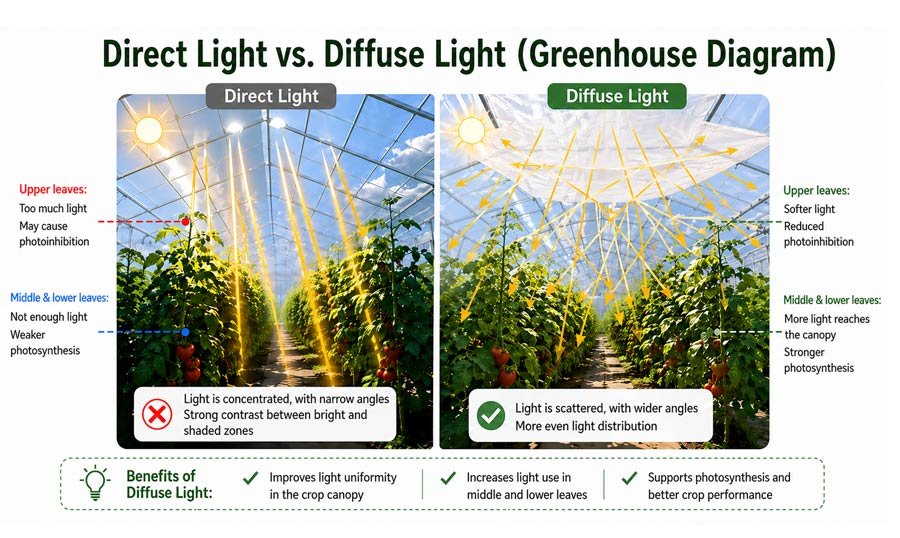
For tall crops such as tomatoes, cucumbers, peppers, and many flowering plants, this uneven light distribution can reduce the light use of the full canopy. When light is more evenly distributed, more leaves can take part in photosynthesis. This helps create a more balanced growing environment and supports more uniform crop growth.
INSONSHADE Climate Screens for Light Management
INSONSHADE Diffusa screens are developed for greenhouse projects where light uniformity is important. They can be used as internal climate screens in commercial greenhouse curtain systems, helping growers manage light distribution while supporting stable daily operation.
Related Product
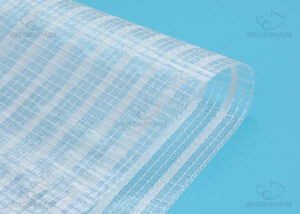
This type of climate screen uses white diffusive strips and textile structures to scatter incoming light. This helps create a softer light environment and reduces strong direct sunlight inside the greenhouse. Depending on the project needs, these screens can offer different shading rates, light transmission levels, and energy-saving performance. This allows growers to choose a screen that matches the crop type, greenhouse structure, local climate, and seasonal light conditions.
Custom Options for Commercial Greenhouse Projects
Different greenhouses have different light management needs. For example, a tomato greenhouse in a high-radiation region may need stronger shading and diffusion. A nursery or flower greenhouse may need softer light with higher light transmission. A high-tech glass greenhouse may need a screen that works smoothly with an automated curtain system. INSONSHADE can support project-based customization for climate screens, including:
- 1. Shading rate
- 2. Light transmission
- 3. Energy-saving level
- 4. Screen width
- 5. Internal curtain system compatibility
- 6. OEM and ODM requirements